



What's Happening?
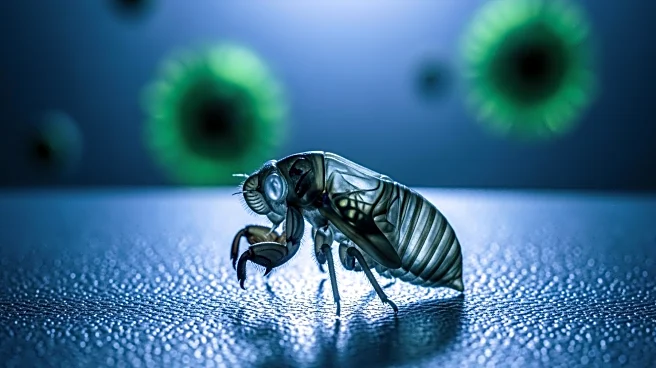
A new COVID-19 variant, BA.3.2, nicknamed 'Cicada', has been identified in multiple countries, including the United States. Characterized by a high number of mutations, it has drawn attention from health authorities. Despite its mutations, early data
suggest it is not more severe than previous variants. The variant was first detected in South Africa in 2024 and has since appeared sporadically. In the U.S., it was first identified in June 2025 and has been found in at least 25 states. Health experts emphasize that while the variant may partially evade vaccine protection, vaccines still offer defense against severe illness.
Why It's Important?
The emergence of the 'Cicada' variant underscores the ongoing evolution of the COVID-19 virus and the challenges it poses to public health. Its presence in the U.S. and Europe highlights the need for continued vigilance and adaptation of health strategies. The variant's ability to partially evade vaccines could impact vaccination campaigns and public health policies. However, the reassurance that vaccines still protect against severe disease is crucial for maintaining public confidence in vaccination efforts. Monitoring and research will be essential to understand the variant's behavior and inform future health responses.
What's Next?
Health authorities will continue to monitor the spread and impact of the 'Cicada' variant. Ongoing research will focus on its transmissibility and potential to cause severe illness. Vaccine manufacturers may consider updating formulations to enhance protection against this and other emerging variants. Public health messaging will likely emphasize the importance of vaccination and booster shots, especially for vulnerable populations. The situation will require international cooperation to track the variant's spread and share data on its effects.