







What's Happening?
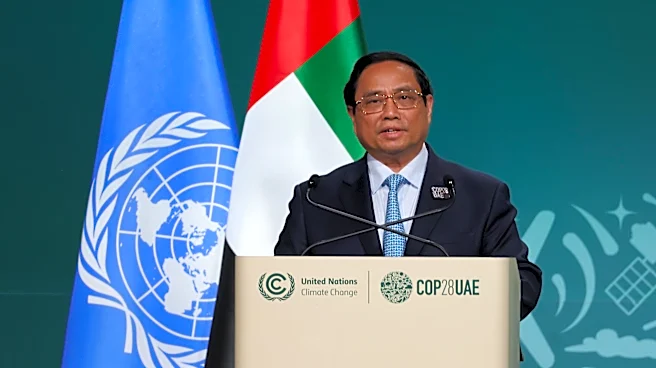
The International Union for Conservation of Nature (IUCN) is preparing for active engagement at the UN Climate Change Conference COP31. This conference is set to occur at a critical juncture, as the global consequences of climate change have become increasingly
evident, and the 1.5°C temperature rise goal is now considered unavoidable due to delayed action. The IUCN will emphasize the urgent need for significant emissions reductions, the protection and restoration of ecosystems, and the implementation of transformative adaptation strategies. Additionally, the organization will advocate for scaling up climate finance. A key focus for IUCN will be ensuring that the necessary energy and climate transitions are just, nature-positive, and foster stronger synergies across the Rio Conventions. The organization also stresses the importance of collaboration between State and non-State actors to achieve tangible outcomes that benefit climate, nature, and people.
Why It's Important?
The IUCN's active participation at COP31 is crucial for shaping international climate policy and action, which has direct implications for the United States. As a major global economy and emitter, U.S. commitments and actions on climate change are vital. The conference's focus on emissions reduction, ecosystem restoration, and climate finance will influence global standards and expectations, potentially leading to new international agreements or pressures that could impact U.S. industries, energy policies, and environmental regulations. The emphasis on 'just and nature-positive' transitions could guide U.S. investments in renewable energy and conservation efforts, affecting sectors from agriculture to technology. Furthermore, the call for stronger synergies across the Rio Conventions highlights the interconnectedness of climate, biodiversity, and desertification, which could lead to more integrated environmental policies in the U.S. and globally. U.S. businesses and policymakers will need to adapt to evolving international climate frameworks and contribute to global efforts to mitigate climate change.
What's Next?
Following COP31, governments, including the United States, will be expected to deliver on their agreed commitments under the Paris Agreement and continue to enhance their collective ambition to minimize the duration and magnitude of the temperature overshoot. The IUCN's advocacy for increased climate finance and nature-based solutions could lead to new funding mechanisms and investment opportunities in the U.S. and internationally. Policymakers will likely face pressure to integrate climate action with biodiversity conservation and social justice, potentially influencing future legislative efforts and resource allocation. Businesses, particularly those in energy, agriculture, and technology sectors, may see shifts in regulatory landscapes and consumer demands, driving innovation towards more sustainable practices. The outcomes of COP31 will set the stage for ongoing international climate negotiations and domestic policy adjustments in the U.S. aimed at addressing the escalating climate crisis.
Beyond the Headlines
The discussions at COP31, particularly those championed by the IUCN, underscore a deeper shift in global environmental governance: the recognition that climate change and biodiversity loss are inextricably linked and require integrated solutions. This perspective challenges traditional siloed approaches to environmental policy, advocating for a holistic 'nature-positive' framework that could redefine economic development and resource management. For the U.S., this could mean a re-evaluation of infrastructure projects, land use policies, and industrial practices to ensure they not only reduce carbon emissions but also enhance ecological resilience and social equity. The emphasis on 'just transitions' also highlights the ethical imperative to ensure that climate action does not disproportionately burden vulnerable communities, prompting a re-examination of environmental justice issues within U.S. climate policy. This broader understanding of environmental challenges could foster a more comprehensive and equitable approach to sustainability across all sectors.