
What's Happening?
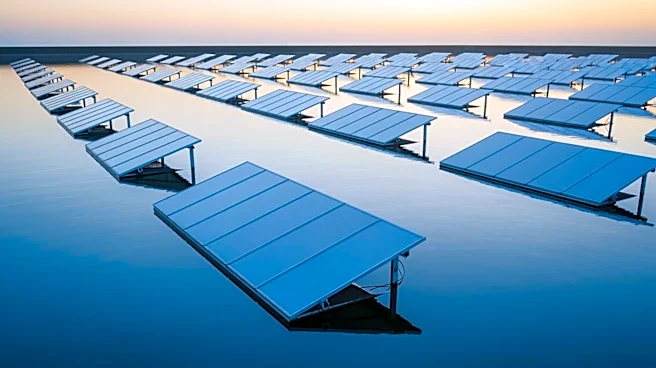
A report by Bluefield, with analysis from CBI Economics, has evaluated the potential for floating solar energy deployment across the UK. The study estimates that floating solar capacity could reach 3.6
GW by 2030, 18.3 GW by 2040, and exceed 40 GW by 2050, rivaling the UK's offshore wind capacity. The report highlights the benefits of reservoir-based systems, which can generate power close to demand centers and industrial zones. Additional advantages include reduced water evaporation, improved water quality, and enhanced panel efficiency. The study also notes potential cost stability and new revenue opportunities for water utilities and industrial users.
Why It's Important?
The expansion of floating solar energy in the UK represents a significant step towards diversifying renewable energy sources and enhancing energy security. By utilizing reservoirs, the UK can generate clean energy close to where it is needed, reducing transmission losses and supporting grid stability. This development could also provide economic benefits by creating new revenue streams for water utilities and reducing operational costs. The projected growth in floating solar capacity aligns with global efforts to transition to sustainable energy sources and reduce carbon emissions, contributing to climate change mitigation.
What's Next?
As the UK moves towards increasing its floating solar capacity, stakeholders will need to address regulatory, technical, and financial challenges. Collaboration between government, industry, and research institutions will be crucial to overcoming these barriers and ensuring successful implementation. The development of supportive policies and incentives could accelerate investment and innovation in this sector. Monitoring and evaluation of pilot projects will provide valuable insights and inform future strategies for scaling up floating solar energy.