
What's Happening?
Kawasaki Heavy Industries, in collaboration with Japan Suiso Energy, has announced plans to build the world's largest liquefied hydrogen carrier. This initiative is part of a broader effort to commercialize
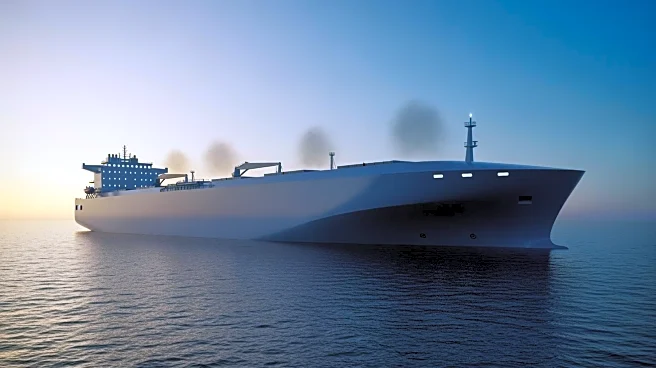
an international hydrogen supply chain. The vessel, which will have a cargo capacity of approximately 40,000 cubic meters, is set to be constructed at Kawasaki Heavy Industries' Sakaide Works in Kagawa Prefecture, Japan. Japan Suiso Energy is overseeing the project as part of Japan's New Energy and Industrial Technology Development Organization (NEDO) Green Innovation Fund Project. This development marks a significant step in advancing hydrogen as a viable energy source on a global scale.
Why It's Important?
The construction of the world's largest liquefied hydrogen carrier is a pivotal development in the global energy sector, particularly in the context of transitioning to cleaner energy sources. Hydrogen is increasingly viewed as a key component in reducing carbon emissions and achieving energy sustainability. By facilitating the transportation of hydrogen on a large scale, this project could significantly enhance the feasibility of hydrogen as a mainstream energy source. This initiative not only supports Japan's energy goals but also has implications for international energy markets, potentially influencing energy policies and investments in hydrogen infrastructure worldwide.
What's Next?
As the construction of the liquefied hydrogen carrier progresses, stakeholders in the energy sector will likely monitor its impact on the hydrogen supply chain closely. The successful deployment of this vessel could lead to increased investments in hydrogen infrastructure and technology. Additionally, other countries may follow suit, developing their own hydrogen transport capabilities to capitalize on the growing demand for clean energy. The project's progress will also be of interest to environmental groups and policymakers advocating for sustainable energy solutions.
Beyond the Headlines
The development of this hydrogen carrier also raises questions about the long-term sustainability and environmental impact of hydrogen production and transportation. While hydrogen is a clean energy source, its production can be energy-intensive and may involve carbon emissions if not managed properly. This project could prompt further research and innovation in producing hydrogen more sustainably, potentially influencing future regulatory frameworks and industry standards.