


What's Happening?
Curt Gowdy State Park, located 25 miles west of Cheyenne, Wyoming, provides a 3,395-acre outdoor destination for residents and visitors. The park offers diverse recreational activities, including fishing in multiple reservoirs for species like Kokanee
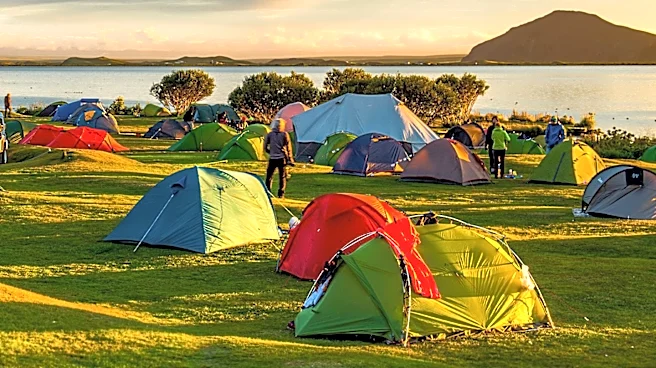
salmon and rainbow trout, and various boating options such as kayaking, paddleboarding, and water-skiing. The park features a 35-plus-mile trail system, designated as 'Epic' by the International Mountain Bicycling Association (IMBA) in 2009, accommodating hikers, mountain bikers, and equestrians. Visitors can explore trails leading to scenic reservoir views, hidden waterfalls, and rugged rock formations. Camping facilities are extensive, with 178 sites across 16 campgrounds, including standard tent sites, RV sites with electric hookups, equestrian camping, and cabin rentals. Reservations are available from mid-May to the end of September, with first-come, first-served camping outside this period. The park is a convenient 30-minute drive from both Cheyenne and Laramie.
Why It's Important?
Curt Gowdy State Park serves as a significant recreational asset for Wyoming, particularly for residents of Cheyenne and Laramie, offering accessible outdoor activities without the extensive travel required for destinations like Yellowstone National Park. Its designation as an 'Epic' trail system by IMBA highlights its importance in the mountain biking community, potentially drawing enthusiasts from across the region and contributing to local tourism. The park's diverse offerings, from fishing and boating to hiking and camping, cater to a broad demographic, promoting public health and well-being through outdoor engagement. The availability of various camping options, including RV and cabin rentals, supports different visitor preferences and economic contributions through park fees and local spending. The park's role in providing a natural escape underscores the value of state parks in preserving natural landscapes and offering accessible leisure opportunities for the U.S. population.
What's Next?
Visitors planning to utilize Curt Gowdy State Park's camping facilities should note that reservations are recommended between mid-May and the end of September. Outside of this peak season, campsites operate on a first-come, first-served basis. Campers should also be aware that running water in restrooms is turned off for the winter starting October 1, though restrooms and showers at the visitor center remain available before then. A key consideration for all campers is the absence of a dump station within the park, necessitating off-site waste disposal. Boaters should be mindful of specific horsepower restrictions on the park's three reservoirs: Granite Springs Reservoir has no restrictions, Crystal Reservoir enforces a 15-horsepower cap, and Upper North Crow Reservoir is limited to non-motorized vessels like kayaks and canoes. Trail users are advised to wear hats on exposed trails and watch for snakes, while those hiking to Hidden Falls should bring water shoes and be aware of poison ivy.
Beyond the Headlines
The existence and popularity of Curt Gowdy State Park reflect a broader trend in the U.S. towards valuing and utilizing local and regional natural spaces for recreation, especially as alternatives to more distant national parks. The park's 'Epic' trail designation by IMBA not only elevates its status within the mountain biking community but also underscores the growing demand for high-quality, specialized outdoor infrastructure. This highlights a shift in how natural resources are managed, moving beyond mere preservation to active recreational development. The park's accessibility from major cities like Cheyenne and Laramie also points to the critical role of state parks in providing accessible green spaces for urban and suburban populations, contributing to public health and community well-being. The emphasis on diverse activities, from fishing to equestrian trails, showcases a comprehensive approach to outdoor recreation that caters to varied interests and skill levels, fostering a deeper connection between individuals and the natural environment.