









What's Happening?
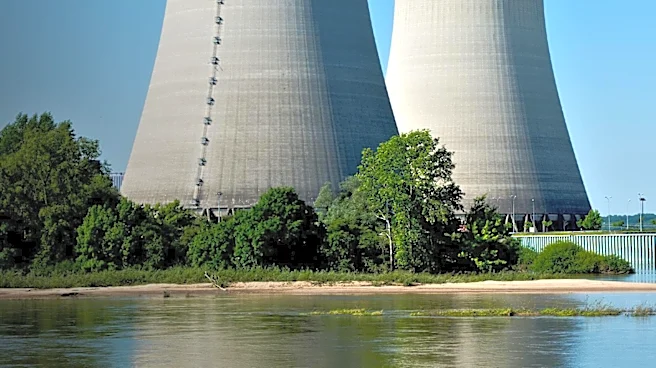
Unusually warm river temperatures in France are impacting the operation of nuclear power plants, which rely on river water for cooling. Under French environmental regulations, power plants must limit heat discharge into rivers, potentially reducing electricity
output when water temperatures rise. Recently, EDF temporarily shut down a reactor at the Golfech nuclear power station due to high river temperatures, and similar restrictions are anticipated at the Nogent station. The heatwave has also increased electricity demand across Europe, further straining energy resources.
Why It's Important?
The situation underscores the vulnerability of energy infrastructure to climate change, particularly in regions reliant on natural water bodies for cooling. The potential reduction in nuclear power output could lead to energy shortages or increased reliance on fossil fuels, complicating efforts to reduce carbon emissions. The increased demand for electricity due to air conditioning use highlights the need for energy efficiency and alternative cooling solutions. This event may prompt a reevaluation of energy policies and infrastructure resilience in the face of climate change.
What's Next?
If river temperatures continue to rise, further restrictions on nuclear power output may be necessary, potentially leading to energy shortages. This could prompt France and other European countries to explore alternative energy sources or increase imports to meet demand. The situation may also accelerate discussions on enhancing the resilience of energy infrastructure to climate impacts. In the long term, this event could influence energy policy, encouraging investment in renewable energy and technologies that reduce dependency on water-cooled systems.
Beyond the Headlines
The reliance on river water for cooling nuclear plants raises ethical and environmental concerns about the sustainability of current energy practices. The event may prompt a broader discussion on the balance between energy needs and environmental protection. It also highlights the potential for climate change to disrupt critical infrastructure, emphasizing the importance of integrating climate resilience into energy planning. The situation could lead to increased public awareness and support for policies addressing climate change and energy sustainability.