








What's Happening?
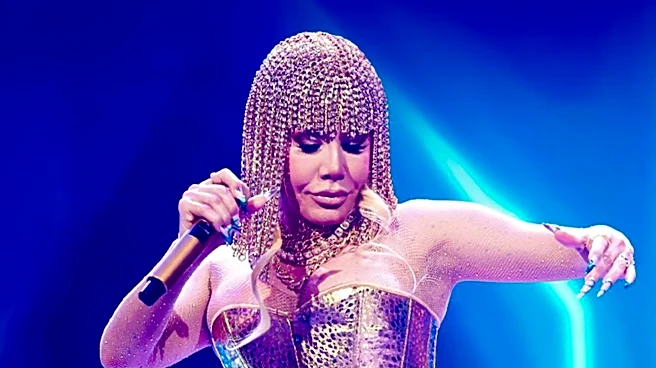
Rapper Cardi B has publicly addressed accusations of using the killing of 15-year-old Javits Frimpong as 'rage bait' by a social media user named Kyle. This accusation arose after edited clips of Cardi B's comments about bullying spread online. In an
Instagram post, Cardi B clarified that parts of her livestream had been edited to encourage attacks on celebrities, arguing that these clips diverted attention from the serious issue of Frimpong's death. She emphasized the gravity of what happened to Javits and urged adults to take responsibility for teaching their children kindness to prevent bullying. Cardi B also linked harassment to young people seeking safety in gangs, drawing from her own experiences, and rejected the notion that any single racial or ethnic group is solely responsible for bullying. Frimpong was shot in the Bronx on October 29 while walking to school, and police are investigating potential motives, including bullying, robbery, or mistaken identity.
Why It's Important?
Cardi B's response highlights the pervasive issue of misinformation and selective editing on social media, which can distort public discourse and misrepresent individuals' intentions. Her call for parents to address bullying underscores a critical societal concern, particularly in urban environments where youth violence and gang involvement remain significant problems. By sharing her personal experience, Cardi B adds a layer of authenticity to her message, potentially resonating with a wider audience. The incident also brings to light the challenges public figures face in controlling their narratives online and the potential for their words to be manipulated for various agendas. The tragic death of Javits Frimpong, and the subsequent student walkout at his school, emphasize the urgent need for communities and educational institutions to address bullying and gun violence effectively, ensuring the safety and well-being of young people.
What's Next?
The ongoing police investigation into Javits Frimpong's death continues, with authorities seeking three teenage boys and considering various motives. School officials have reportedly refused to release the names of two boys suspended for bullying Frimpong without a court order, indicating potential legal complexities in the investigation. Cardi B's continued advocacy against bullying and her efforts to clarify her statements may contribute to broader conversations about online responsibility and youth violence. The incident could prompt further discussions among social media platforms regarding content moderation and the prevention of 'rage baiting.' Community leaders and educational institutions may also face increased pressure to implement more effective anti-bullying programs and safety measures to protect students.
Beyond the Headlines
This event transcends a typical celebrity news story, touching upon deeper societal issues such as the impact of social media on public perception, the prevalence of bullying, and the tragic consequences of youth violence. Cardi B's personal connection to the Bronx and her candid remarks about raising children in New York City highlight the complex challenges faced by many urban communities. The refusal of school officials to release names without a court order also raises questions about privacy, legal protocols, and the balance between protecting individuals and aiding criminal investigations. The concept of 'rage bait' itself points to a concerning trend in online interactions, where emotionally charged content is deliberately used to provoke strong reactions, often at the expense of factual accuracy and constructive dialogue. This incident serves as a stark reminder of how online narratives can intersect with real-world tragedies, influencing public opinion and potentially hindering efforts to address critical social problems.