






What's Happening?
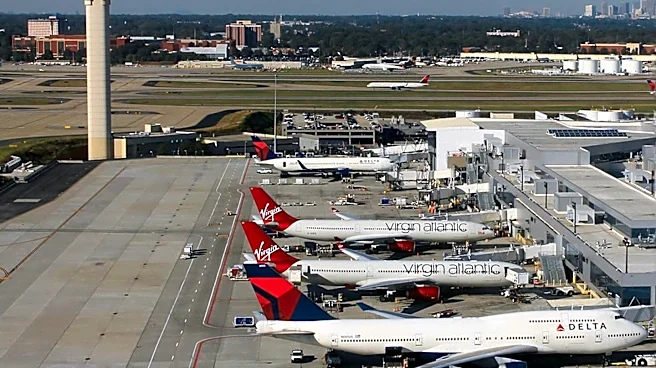
Delta Flight 1035, en route from Jacksonville, Florida, to New York’s JFK International Airport, was diverted to Raleigh-Durham International Airport (RDU) after fumes were detected in the cabin. The incident occurred on a Monday night, leading to an
unscheduled landing in Raleigh. According to Delta, the crew followed established procedures for such an event, and the aircraft landed safely. There were 108 customers and five crew members on board, all of whom deplaned normally at the gate. No injuries were reported. Delta released a statement apologizing for the delay and emphasizing that customer and employee safety is paramount. The airline is currently investigating the cause of the odor that prompted the diversion.
Why It's Important?
This incident highlights the critical importance of airline safety protocols and crew training in managing unexpected in-flight issues. While no injuries occurred, any report of fumes in an aircraft cabin is taken seriously due to potential health risks to passengers and crew, as well as the possibility of a more severe mechanical problem. Such diversions can cause significant disruptions to travel plans for affected passengers, leading to missed connections and extended travel times. For Delta, these events can impact operational efficiency and customer satisfaction, necessitating swift action to re-accommodate passengers and thoroughly investigate the cause to prevent future occurrences. The airline industry's reputation for safety relies heavily on its ability to respond effectively to these situations.
What's Next?
Delta Airlines is actively working to find alternative flights for the 108 affected passengers to ensure they reach their final destination in New York. Concurrently, an investigation into the cause of the odor detected in the cabin of Flight 1035 is underway. This investigation will likely involve examining the aircraft's ventilation systems, engine performance, and any potential sources of fumes. The findings of this inquiry will be crucial for identifying and rectifying any underlying issues to prevent similar incidents in the future. Depending on the outcome, it could lead to maintenance adjustments, procedural changes, or even broader safety advisories within the airline.
Beyond the Headlines
The diversion of Delta Flight 1035 due to reported fumes underscores the constant vigilance required in aviation safety. Beyond the immediate inconvenience to passengers, such incidents can trigger a deeper examination of aircraft maintenance schedules, cabin air quality monitoring systems, and emergency response training for flight crews. The detection of odors, even if ultimately benign, can be a precursor to more serious mechanical failures, making thorough investigation paramount. This event also subtly reinforces public trust in air travel safety, as the crew's adherence to protocol ensured a safe outcome. The ongoing investigation will not only address the specific incident but also contribute to the continuous improvement of safety standards across the airline industry, impacting how airlines manage and mitigate potential in-flight hazards.