






What's Happening?
Governor Mikie Sherrill of New Jersey has signed the Power NJ Act, a bipartisan bill aimed at establishing a state-led procurement framework for new nuclear generation projects. This legislation is part of New Jersey's strategy to aggressively develop
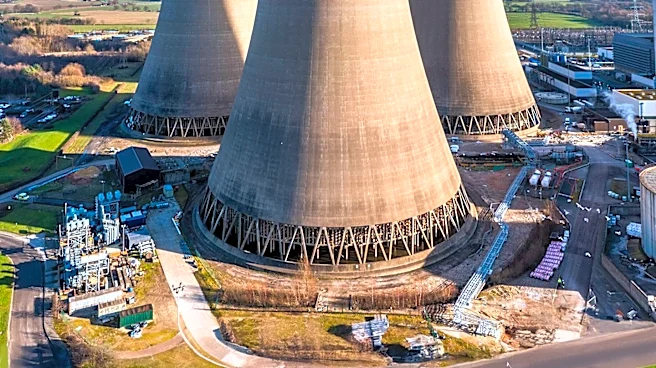
new nuclear energy generation. The New Jersey Board of Public Utilities (NJBPU), in collaboration with the New Jersey Economic Development Authority (NJEDA), is tasked with creating a competitive process to procure at least 1,100 megawatts of new nuclear generation capacity. The NJBPU is expected to issue a request for expressions of interest by January 2027, with final board orders on new nuclear projects anticipated by July 2028. The law includes safeguards to protect utility customers from project development risks, requiring federal financing and a demonstration of net benefits to ratepayers before project approval.
Why It's Important?
The Power NJ Act represents a significant shift in New Jersey's energy policy, potentially setting a precedent for other states considering nuclear energy as a viable option for sustainable power generation. By removing long-standing barriers to nuclear development, New Jersey aims to diversify its energy portfolio and reduce reliance on fossil fuels. This move could stimulate economic growth through job creation in the nuclear sector and enhance energy security. However, it also raises concerns about the environmental impact and financial risks associated with nuclear projects. The legislation's emphasis on public engagement and independent review aims to address these concerns and ensure transparency in the decision-making process.
What's Next?
The NJBPU will begin the process of soliciting interest from project developers, who will need to submit detailed proposals addressing various considerations, including technical, environmental, and financial aspects. Public hearings and comment periods will be held to gather input from affected communities. The New Jersey Division of the Rate Counsel will conduct an independent review to ensure that proposed projects meet statutory requirements and provide sufficient benefits to ratepayers. As the state moves forward with its nuclear strategy, it will be crucial to monitor the implementation of these projects and their impact on New Jersey's energy landscape.