





What's Happening?
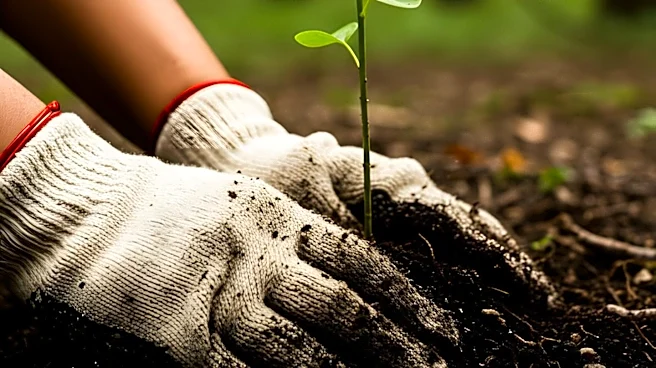
A recent study has revealed that China's extensive reforestation efforts, which have added approximately 78 billion trees, have significantly altered the country's water cycle. The initiative, known as the Three-North Shelterbelt or 'The Great Green Wall,'
aimed to combat soil erosion and desertification. However, the study, published in Earth's Future, indicates that these efforts have led to increased evaporation and transpiration, affecting precipitation patterns. As a result, some regions have experienced increased water availability, while others have seen a decrease. The study highlights the need for careful consideration of hydrological impacts in future reforestation projects.
Why It's Important?
The findings underscore the complex relationship between large-scale environmental projects and natural ecosystems. While reforestation is generally seen as beneficial for combating climate change and improving air quality, this study illustrates potential unintended consequences, such as altered water distribution. This has significant implications for water resource management, particularly in regions already facing water scarcity. The study's insights could influence future environmental policies and strategies, not only in China but globally, as countries strive to balance ecological restoration with sustainable resource management.
What's Next?
The study suggests that future reforestation efforts should incorporate hydrological considerations to avoid adverse impacts on water availability. Policymakers and environmental planners may need to develop integrated approaches that account for both ecological and hydrological factors. This could involve more targeted planting strategies and the use of technology to monitor and manage water resources effectively. As the global community continues to address climate change, these findings could inform international reforestation initiatives and contribute to more sustainable environmental practices.