







What's Happening?
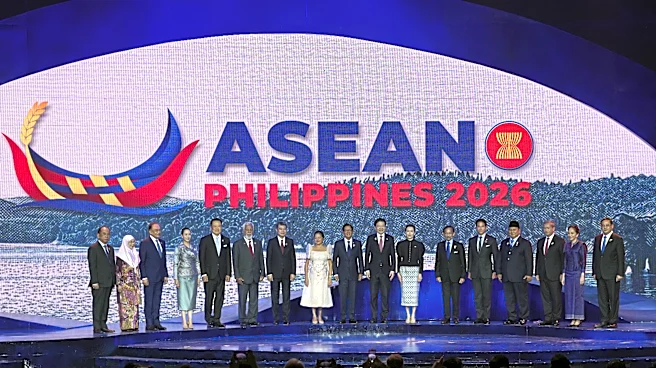
The Association of Southeast Asian Nations (ASEAN) is set to make artificial intelligence (AI) a central topic at its 49th Summit in November. According to Dominic Xavier Imperial, Executive Director of the DFA ASEAN Office, AI is prominently featured
in discussions under the Philippine chairship. The summit is expected to include the signing of the ASEAN Digital Economy Framework Agreement (DEFA), a legally binding, region-wide agreement aimed at establishing common rules for digital trade and data flows. Discussions will also cover a statement on AI-powered growth for micro, small, and medium enterprises (MSMEs), and the application of AI in healthcare, including medical diagnosis, and its role in addressing climate change. While AI is a high-priority agenda item, current reports do not indicate the adoption of a binding AI law or a licensing regime for frontier AI models at this summit. ASEAN's current AI governance framework primarily consists of voluntary guides, such as the 2024 Guide on AI Governance and Ethics and its 2025 expansion targeting generative AI risks, along with the ASEAN AI Safety Network (AI SAFE) established in October 2025.
Why It's Important?
The prioritization of AI at the ASEAN Summit signifies a growing recognition among member states of the technology's transformative potential and associated risks. The expected signing of DEFA is crucial as it will establish a foundational legal framework for the region's digital economy, which could later serve as a platform for more specific AI regulations. This move could enhance regulatory predictability for businesses operating in Southeast Asia, potentially reducing the costs of cross-border digital service delivery. For AI developers and vendors, understanding ASEAN's evolving stance on AI governance is vital, as it will influence market access and operational requirements. The focus on AI for MSMEs highlights an effort to foster economic growth and inclusivity, but also raises questions about how smaller firms will manage the risks associated with AI adoption. The discussions on AI in healthcare and climate change underscore the high-stakes applications where regulatory scrutiny is typically most stringent, indicating future areas of potential policy development.
What's Next?
The 49th ASEAN Summit in November is expected to see the signing of the DEFA, which will establish a legally binding framework for the digital economy across the region. A statement on AI-powered growth for MSMEs, potentially accompanied by an action plan, is also anticipated. While no binding AI laws are expected immediately, the DEFA could serve as a legal chassis for future AI-specific regulations. Member states will likely continue to translate the bloc's voluntary AI guidance into domestic rules at varying paces. The ASEAN AI Safety Network (AI SAFE) is expected to become a primary venue for safety coordination, potentially expanding to include testing exchanges or incident sharing. As AI model releases continue at a rapid pace, pressure is likely to grow for more concrete, model-level commitments regarding pre-release testing and incident reporting within the ASEAN framework.
Beyond the Headlines
ASEAN's approach to AI governance, characterized by gradual steps from voluntary guides to a binding digital economy framework, reflects a common diplomatic strategy in consensus-based bodies. This incrementalism allows member states with diverse legal systems to agree on principles before moving to more prescriptive regulations. However, the rapid pace of AI innovation, with multiple new models released in short periods, poses a significant challenge to this slower diplomatic rhythm. The current framework's reliance on voluntary guides and a trade-style agreement means that specific duties on model developers, such as mandatory testing or incident reporting, are not yet in place. This gap highlights a tension between fostering innovation and ensuring safety, leaving implementation largely to individual national agencies with varying capacities. The long-term effectiveness of ASEAN's AI governance will depend on its ability to adapt to technological advancements while balancing economic benefits with robust risk management, potentially by leveraging the DEFA as a mechanism for future, more specific AI regulations.