









What's Happening?
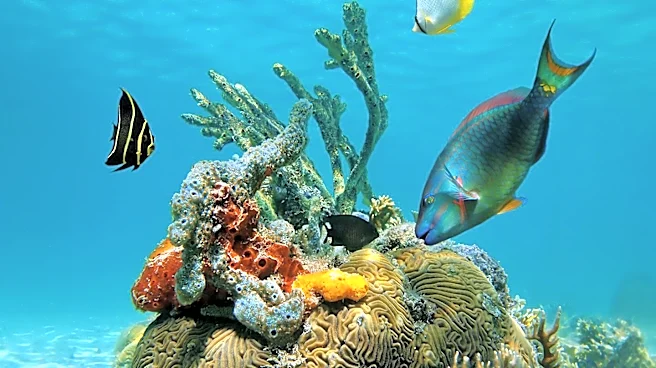
Restoration efforts for coral reefs in Florida are grappling with the complex challenge of balancing the benefits of larval connectivity with the risks of disease transmission. A new study, utilizing a computer model of ocean currents, has examined how
these two factors influence coral restoration and disease spread across Florida’s Coral Reef, from southeast Florida through the Florida Keys to the Dry Tortugas. The research focused on the dispersal of larvae from five coral species and the pathogen associated with stony coral tissue loss disease (SCTLD), which has severely damaged coral populations. The findings indicate that disease is more widely connected across the reef system than coral larvae, meaning that while some reefs can help replenish surrounding populations, they also have strong connections to areas where disease can spread. Connectivity patterns were observed to vary among coral species due to differences in spawning times and ocean currents affecting their larvae. This highlights the need for a nuanced approach to restoration planning that considers both the positive and negative aspects of ecological connections.
Why It's Important?
This research is crucial for the future of marine conservation and the health of U.S. coastal ecosystems, particularly in Florida. Coral reefs are vital for biodiversity, coastal protection, and the tourism industry. The study's findings underscore that simply focusing on larval dispersal for restoration could inadvertently increase the risk of disease spread, jeopardizing recovery efforts. Identifying restoration hotspots like Cheeca Rocks and Carysfort reefs, which show high restoration value while limiting disease risk, allows managers to make more informed investment decisions. Conversely, sites with lower scores due to greater disease exposure or limited larval supply potential will require different strategies. The economic implications are significant, as healthy coral reefs support fisheries and attract tourists, contributing substantially to local economies. A failure to effectively restore these reefs could lead to long-term ecological and economic decline, impacting coastal communities and industries reliant on marine ecosystems.
What's Next?
The study emphasizes that its model should complement other ecological information and management priorities, rather than serving as the sole basis for selecting restoration sites. Moving forward, marine conservation managers will need to integrate these findings into their planning processes, adopting a more holistic approach that considers both the benefits and risks of connectivity. This will likely involve continued monitoring of disease prevalence and larval dispersal patterns, as well as adaptive management strategies that can respond to changing environmental conditions. Further research may focus on developing more sophisticated models that incorporate additional ecological factors and socio-economic considerations. Collaboration between scientists, policymakers, and local communities will be essential to implement effective restoration strategies that strengthen the resilience of reef ecosystems under the ongoing threats of climate change, warming oceans, and emerging diseases.
Beyond the Headlines
The deeper implications of this study extend to the broader understanding of ecological connectivity in conservation. It highlights a critical dilemma: the very mechanisms that facilitate population recovery (connectivity) can also accelerate the spread of threats (disease). This paradox is not unique to coral reefs but can be observed in various ecosystems, from terrestrial landscapes to human populations. The research prompts a re-evaluation of traditional conservation strategies that often prioritize connectivity without fully accounting for potential negative externalities. Ethically, it raises questions about the responsibility of conservationists to mitigate unintended consequences of their interventions. Legally, it could influence regulations and funding allocations for marine protected areas and restoration projects, pushing for more comprehensive risk assessments. Culturally, the health of coral reefs is intertwined with the identity and livelihoods of many coastal communities, making effective restoration a matter of cultural preservation and economic justice.