

What's Happening?
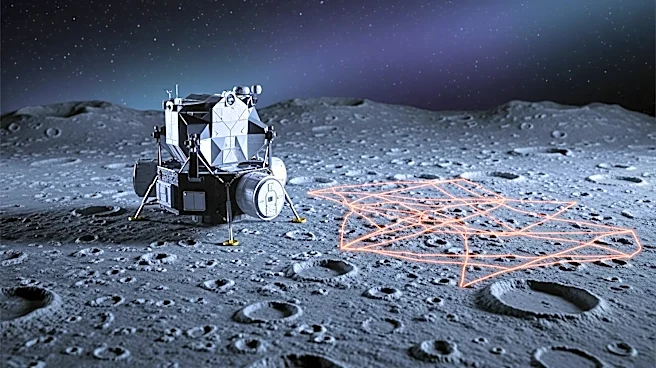
Researchers at George Mason University have developed a virtual model to simulate interactions among astronauts in future moon base operations. The model, part of NASA's Artemis program, aims to aid planning and risk assessment for establishing a permanent
lunar base. It incorporates cognitive, social, emotional, and environmental factors, simulating various scenarios including equipment failures and environmental challenges like moonquakes. The simulations suggest that increasing crew size can enhance skill development and teamwork, while longer missions may introduce psychological stress, affecting performance.
Why It's Important?
The findings are crucial for the success of NASA's Artemis program, which seeks to establish a sustainable human presence on the moon. Understanding team dynamics and environmental interactions is vital for mission planning and risk mitigation. The research highlights the importance of psychological and social factors in space missions, which could influence training and support systems for astronauts. The study's insights could also inform future space exploration missions, including those to Mars.
What's Next?
Further research is needed to refine the simulations, potentially incorporating physiological effects of extended space missions and communication delays with Earth. These improvements could enhance the accuracy of predictions and inform strategies for optimizing mission success. The study may also lead to collaborations with other space agencies and research institutions to develop comprehensive models for space mission planning.