





What's Happening?
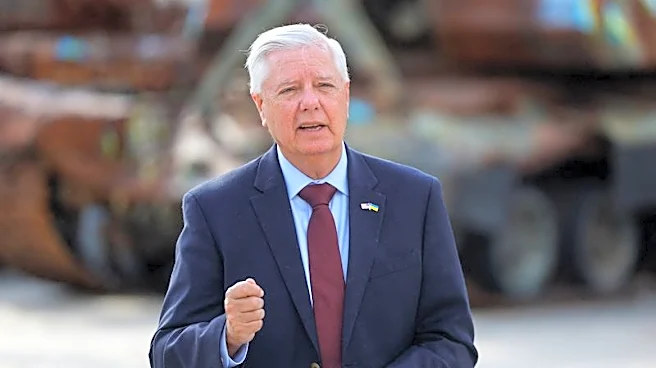
A proposed bipartisan bill, the 'Lindsey O. Graham Sanctioning Russia Act of 2026,' is causing a split among potential Democratic presidential candidates for 2028. The bill aims to impose tariffs on the top five foreign purchasers of Russian oil and gas
to penalize Russia for its actions in Ukraine. However, some Democrats are concerned that the bill would grant President Trump excessive authority to impose tariffs, potentially harming the U.S. economy. Senators like Cory Booker and Raphael Warnock have expressed reservations about the bill's broad tariff provisions, while others, such as Mark Kelly and Chris Van Hollen, support it. The bill's passage is uncertain as Senate Majority Leader John Thune seeks to fast-track it before the August recess.
Why It's Important?
The debate over this bill highlights the tension between supporting Ukraine and managing domestic economic impacts. Granting the president broad tariff authority could lead to economic repercussions, affecting consumer prices and international trade relations. The bill's outcome could influence U.S. foreign policy and economic strategy, particularly in how the country addresses geopolitical conflicts. The division among Democrats also reflects the broader political landscape as potential candidates position themselves for the 2028 presidential race, balancing foreign policy priorities with economic concerns.
What's Next?
The Senate is expected to vote on the bill soon, with potential amendments to address concerns about its tariff provisions. Democrats may use their leverage to negotiate changes, but the outcome remains uncertain. The bill's passage could lead to increased tensions with U.S. trading partners and impact global oil markets. The decision will also be closely watched by international allies and adversaries, as it could signal the U.S.'s stance on Russia and its commitment to supporting Ukraine.