








What's Happening?
The New Haven Board of Alders has postponed a crucial vote on an ordinance aimed at significantly restricting short-term rentals, such as those offered through Airbnb and Vrbo. The proposed legislation would prohibit landlords from operating short-term rentals—defined
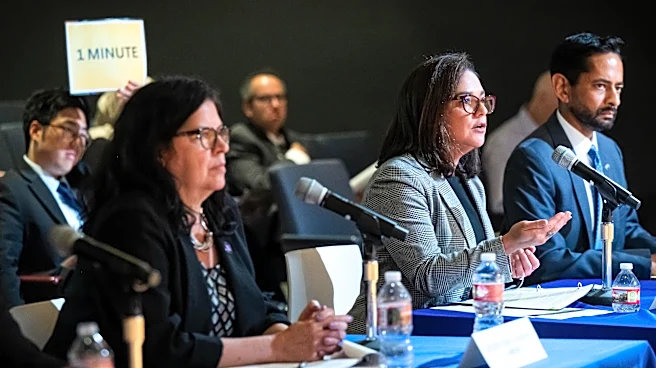
as units leased for 30 days or fewer for transient use—outside of their primary residence. This means owner-occupants of multi-family homes would be prevented from renting out separate apartments within their buildings for short-term stays. The decision to postpone came during a packed meeting at City Hall, attended by approximately 100 individuals representing both supporters and opponents of the ordinance. Majority Leader Richard Furlow stated that the item was 'passed over' due to proposed amendments that required further review by the city's corporation counsel. The delay leaves the door open for a future vote, allowing more time for discussion and potential revisions to the controversial proposal.
Why It's Important?
This postponement highlights the complex and contentious nature of regulating short-term rentals in urban areas, particularly in the context of a housing crisis. Proponents of the ordinance, including advocacy groups like New Haven Rising, argue that short-term rentals reduce the availability of long-term housing, driving up rents and making homeownership less accessible for residents. They cite research suggesting that such regulations can return housing units to the long-term market and improve affordability. Conversely, opponents, including some Airbnb owners, feel targeted by the legislation and argue that short-term rentals provide flexible housing options and income opportunities. The debate reflects a broader national struggle between preserving housing affordability for permanent residents and accommodating the growing short-term rental market, which impacts local economies, tourism, and property values. The outcome in New Haven could set a precedent for other cities grappling with similar housing challenges.
What's Next?
The Board of Alders will likely revisit the short-term rental ordinance in a future meeting, though no specific date has been set. The delay provides an opportunity for further deliberation on the proposed amendments and for city officials to consult with legal counsel. Stakeholders on both sides of the issue are expected to continue their advocacy efforts, aiming to influence the final decision. Supporters of the ordinance will likely push for its passage, emphasizing the need for affordable housing and community preservation. Opponents will continue to voice concerns about property rights and economic impact. The city's corporation counsel will play a key role in reviewing the legality and implications of any proposed changes. The eventual vote will determine the future landscape of short-term rentals in New Haven and could influence similar legislative efforts in other U.S. cities.
Beyond the Headlines
The debate in New Haven extends beyond immediate housing policy, touching upon fundamental questions of urban development, property rights, and community character. The rise of platforms like Airbnb has disrupted traditional housing markets, blurring the lines between residential and commercial use of properties. This ordinance attempts to reassert a traditional definition of residential housing, prioritizing long-term tenancy over transient stays. The ethical dimension involves balancing the economic freedom of property owners to rent their assets as they see fit against the collective good of ensuring affordable housing for all residents. Legally, such regulations often face challenges regarding their scope and potential impact on property values. Culturally, the proliferation of short-term rentals can alter neighborhood dynamics, potentially reducing community cohesion as transient populations replace permanent residents. The New Haven situation is a microcosm of a larger societal shift, where technology-driven economic models clash with established urban planning principles and community needs.