






What's Happening?
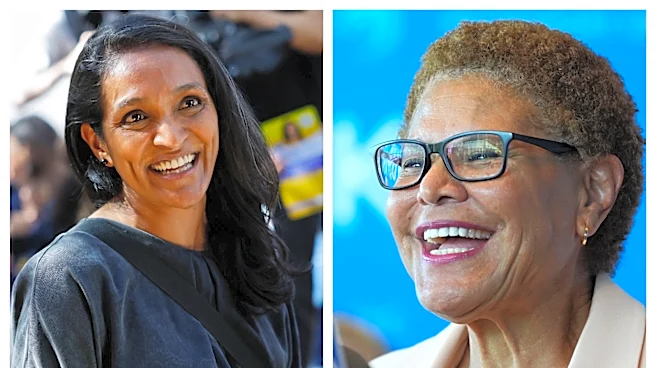
A fabricated poll released by Median Strategies falsely indicated Los Angeles Mayor Karen Bass was leading councilmember Nithya Raman by approximately 12 percentage points in the mayoral race. The poll was initially shared by the Bass campaign on social
media and reported by some news outlets, suggesting a surge in momentum for the incumbent. However, Median Strategies later admitted to the Los Angeles Times that the results were fake, claiming the poll was a 'social experiment' designed to observe how unverified polling information spreads within the political information ecosystem. The company, which was previously unknown and had only recently created its website, has since shut down its online presence and retracted all its purported polling data. This incident highlights the challenges in vetting polling data, especially when originating from obscure sources with undisclosed methodologies.
Why It's Important?
This incident is important because it underscores the vulnerability of the electoral process to misinformation and the potential for fabricated data to influence public perception and voter behavior. When a campaign, even inadvertently, promotes a fake poll, it can create a misleading narrative about a candidate's standing, potentially affecting donor confidence, volunteer enthusiasm, and ultimately, election outcomes. The 'social experiment' justification offered by Median Strategies raises ethical questions about manipulating public discourse under the guise of research, especially in competitive races. Furthermore, the ease with which such unverified information can spread through social media and be picked up by some news outlets demonstrates a broader challenge for media literacy and the need for rigorous verification processes in political reporting. The event also brings into focus the role of prediction markets, as even small shifts in perceived candidate viability can lead to financial implications for those betting on election outcomes.
What's Next?
The Los Angeles County District Attorney's office and the U.S. Department of Justice may investigate whether the fake poll was intended to influence prediction markets, which could constitute fraud. Legal experts suggest that if the intent was to affect markets, it could be considered a prosecutable offense. However, if the sole purpose was a 'social experiment' without financial gain, prosecution is less likely. The Bass campaign has called for investigations into 'bad faith attempts to influence elections.' This incident will likely prompt increased scrutiny of polling sources and methodologies, particularly for new or unknown entities. Campaigns and media outlets may become more cautious in sharing or reporting on polls without transparent information regarding their conduct and funding. The broader discussion around election integrity and the spread of misinformation in political campaigns is expected to continue, potentially leading to calls for stricter regulations or enhanced verification protocols for political data.
Beyond the Headlines
The fake poll incident in Los Angeles reveals deeper implications concerning the erosion of trust in information sources and the weaponization of data in political campaigns. The claim of a 'social experiment' by Median Strategies, while potentially avoiding legal repercussions, highlights a troubling trend where the democratic process itself becomes a testing ground for psychological or sociological studies without the informed consent of the electorate. This can further undermine public confidence in polling as a legitimate tool for understanding voter sentiment, making it harder to distinguish credible data from deliberate manipulation. The incident also exposes the 'credibility problem' in polling, where the proliferation of polls from various sources—some with vested interests—makes it challenging for the public and even campaigns to discern reliable information. This environment fosters an ecosystem where 'invented numbers look legitimate,' as noted by a veteran Republican pollster, and campaigns are incentivized to amplify favorable data without thorough verification, contributing to a cycle of misinformation that can have lasting effects on democratic institutions.