



What's Happening?
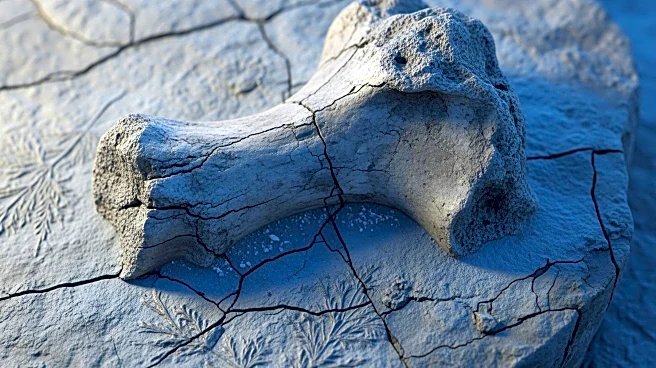
Scientists have uncovered the fossilized remains of a hornless rhino species, Epiaceratherium itjilik, in Canada's High Arctic. This 23-million-year-old discovery challenges previous assumptions about ancient wildlife, suggesting that rhinos once inhabited
far more varied climates than previously thought. The fossils, found in the Haughton Crater on Devon Island, are remarkably well-preserved, providing insights into the anatomy and environment of ancient species. The discovery highlights the adaptability of rhinos to different climates and offers new perspectives on their evolutionary history.
Why It's Important?
The discovery of Epiaceratherium itjilik is significant for understanding the evolutionary history of rhinos and their adaptability to diverse climates. It suggests that the Arctic region once supported temperate forests and a variety of life forms, offering a glimpse into the Earth's past ecosystems. This finding also raises questions about the climatic conditions of the Miocene Epoch, when the Arctic was likely much warmer. The research provides valuable data for studying ancient migration patterns and the impact of climate change on species distribution.
What's Next?
The well-preserved fossils offer opportunities for further research into the anatomy and lifestyle of Epiaceratherium itjilik. Scientists may conduct additional studies to explore the environmental conditions of the Miocene Epoch and the factors that allowed such species to thrive in the Arctic. The discovery could lead to a reevaluation of the role of the North Atlantic Land Bridge in ancient animal migrations, potentially reshaping our understanding of how species spread across continents.