





What's Happening?
Cyclones are large-scale air masses that circulate around a strong center of low pressure, with distinct characteristics depending on their type. Mid-latitude cyclones, forming between 40-60° North and South latitude, are characterized by distinct frontal
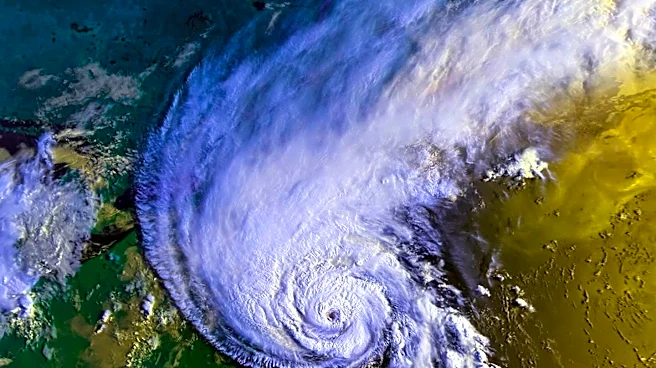
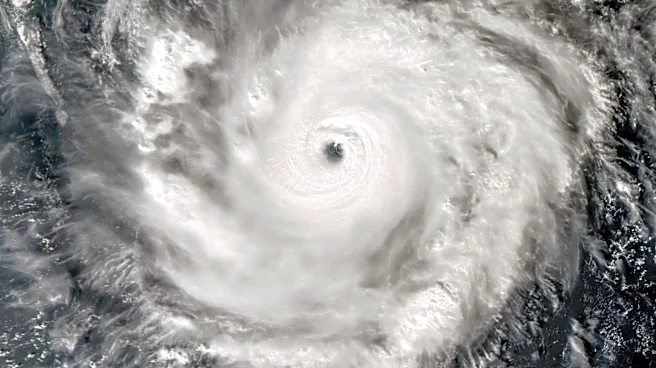
systems including warm fronts, cold fronts, warm sectors, and cold sectors. These cyclones typically appear as elongated systems with wave-like isobar patterns on weather maps. In contrast, tropical cyclones form closer to the equator, around 5° North and South latitude, and are more seasonal, occurring from mid to late summer through early autumn. They appear as tight, circular systems with concentric isobars and a clear eye at the center, displaying a classic spiral cloud pattern.
Why It's Important?
Understanding the characteristics of cyclones is crucial for predicting weather patterns and preparing for potential impacts. Mid-latitude cyclones can bring significant weather changes, including overcast skies, strong winds, and heavy rainfall, affecting agriculture, transportation, and daily life. Tropical cyclones, with their intense winds and heavy precipitation, pose severe risks to coastal regions, impacting infrastructure, economies, and human safety. Accurate identification and tracking of these systems are vital for issuing timely warnings and mitigating damage.