




What's Happening?
California has enacted Assembly Bill 1572, a state conservation law that phases out the use of potable (drinking) water for irrigating non-functional turf (NFT) at commercial, industrial, and institutional (CII) sites, including homeowner association
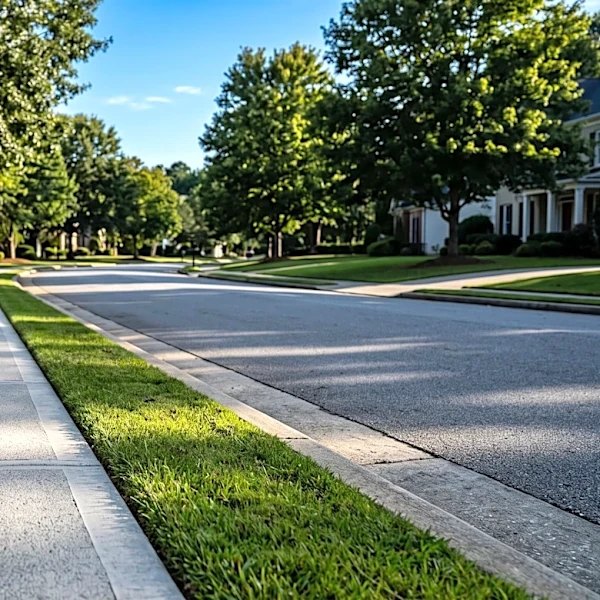
(HOA) common areas. Non-functional turf is defined as purely decorative mowed grass not used for recreation or community activities. The ban will be implemented in phases, starting January 1, 2027, for public agency and local government sites. Commercial, industrial, and institutional properties will follow on January 1, 2028, and HOA common areas on January 1, 2029. Local government properties in disadvantaged communities will have until January 1, 2031. This legislation does not require the removal or replacement of NFT, only the cessation of potable water irrigation. Functional turf, such as that in recreational areas, athletic facilities, cemeteries, and golf courses, is exempt from this ban. Marin Water, a local agency, has also adopted a local rule prohibiting new NFT installations in commercial and municipal landscapes, restricting both potable and recycled water for their maintenance.
Why It's Important?
This phased ban is a significant step in California's efforts to conserve water and promote sustainable landscaping practices, particularly in the face of ongoing drought concerns. By targeting non-functional turf, which often consumes substantial amounts of potable water without serving a practical purpose, the state aims to reallocate precious water resources to more beneficial uses. The legislation impacts a wide range of entities, from government agencies and businesses to HOAs, compelling them to re-evaluate their landscaping choices and irrigation methods. This shift could lead to a broader adoption of drought-tolerant and climate-resilient landscapes, reducing overall water demand and potentially lowering water bills for affected properties. The enforcement of these rules, with properties facing action for non-compliance, underscores the state's commitment to addressing water waste. The distinction between functional and non-functional turf is crucial, ensuring that areas vital for public use and community activities remain irrigated, while decorative lawns are managed more sustainably.
What's Next?
Affected properties, including CII sites and HOAs, must begin preparing for compliance by identifying their turf types and planning for conversion projects. Marin Water, for instance, offers a 'Cash for Grass Program' to incentivize landscape transformations. Properties with over 5,000 square feet of irrigated functional turf will be required to self-certify their compliance to the State Water Board every three years, with deadlines starting June 30, 2030, for CII properties and June 30, 2031, for HOAs. Non-compliant sites will face enforcement actions related to water waste rules. The ongoing implementation of AB 1572 will likely drive innovation in water-efficient landscaping and irrigation technologies. Educational initiatives will also be crucial to help property owners understand the new regulations, distinguish between functional and non-functional turf, and adopt best practices for water conservation. The success of this initiative will depend on consistent monitoring and enforcement by local water utilities and the State Water Board.
Beyond the Headlines
The California ban on irrigating non-functional turf with potable water reflects a growing societal recognition of water as a finite and critical resource, particularly in arid regions. This policy could catalyze a broader cultural shift away from traditional, water-intensive landscaping towards more ecologically appropriate designs. Beyond immediate water savings, the transition to drought-tolerant landscapes can enhance biodiversity, reduce the need for chemical fertilizers and pesticides, and mitigate urban heat island effects. The legislation also highlights the evolving role of government in regulating resource use, moving beyond voluntary conservation to mandatory measures. This could set a precedent for other states facing similar water scarcity challenges. Furthermore, the emphasis on self-certification and enforcement mechanisms underscores a trend towards greater accountability for environmental stewardship among commercial and institutional entities. The long-term implications extend to urban planning, landscape architecture, and the green economy, fostering new industries and practices centered on water efficiency and ecological resilience.