



What's Happening?
Despite the Trump administration's efforts to achieve historically low illegal crossings at the U.S.-Mexico border, Mexican cartels are increasingly utilizing sophisticated underground tunnels for smuggling both drugs and migrants. Homeland Security Secretary
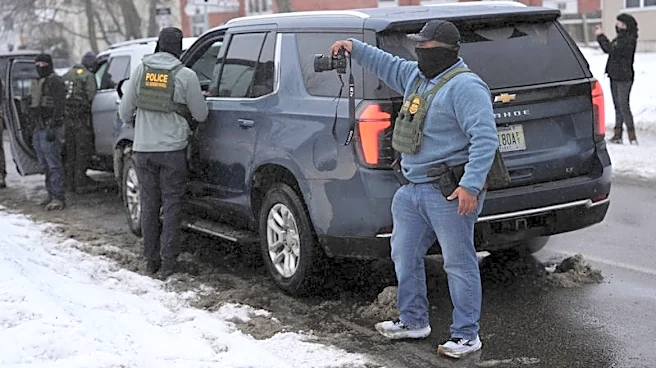
Markwayne Mullin declared the border 'CLOSED to lawbreakers,' yet the intensified enforcement has prompted smugglers to adapt. White House Deputy Chief of Staff Stephen Miller, a key architect of the administration's immigration policies, has been in frequent communication with U.S. law enforcement officials to find new ways to curb illegal immigration, aiming for a 'zero migrants' goal. This crackdown includes adding razor wire, increasing surveillance technology, and deploying autonomous Predator drones. As a result, cartels are now charging migrants up to $25,000 for passage through elaborate tunnels equipped with lights, ventilation, and rail systems, some even connecting to city drainage and sewer systems.
Why It's Important?
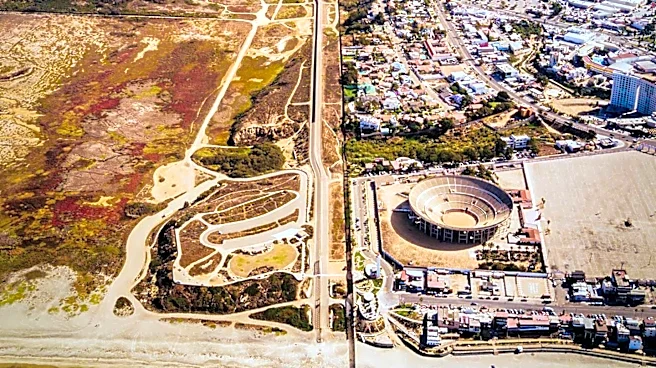
The shift towards more sophisticated tunnel usage by cartels signifies a critical evolution in border security challenges for the United States. While surface crossings may be reduced, the underground infrastructure presents a complex and costly problem for law enforcement. The involvement of cartels like the Jalisco New Generation Cartel (CJNG) in operating these tunnels, as evidenced by a recent discovery in Otay Mesa, California, highlights their dual role in drug and human trafficking. This development impacts U.S. national security by facilitating the entry of illicit substances and individuals, potentially including those with criminal intent, bypassing traditional border controls. The financial incentives for cartels to smuggle people through these tunnels also indicate a lucrative new revenue stream, further empowering these criminal organizations and complicating efforts to dismantle them.
What's Next?
U.S. officials will likely continue to face the challenge of detecting and neutralizing these increasingly complex cross-border tunnels. This will necessitate further investment in advanced detection technologies and intelligence gathering. The Trump administration's push for 'zero migrants' will likely continue to drive cartels to innovate their smuggling methods, potentially leading to even more elaborate and dangerous routes. There may be increased pressure on Mexico to collaborate more extensively with the U.S. in combating these underground operations. The long-term implications include a potential escalation in the technological arms race between border enforcement and cartel operations, as well as ongoing debates about the effectiveness and ethical considerations of current border security policies.
Beyond the Headlines
The reliance on tunnels by cartels reveals a deeper, systemic issue beyond simple border enforcement: the adaptability and resourcefulness of organized crime in the face of heightened security. The use of advanced engineering in these tunnels, such as hydraulic lifts and rail systems, suggests significant financial investment and expertise, indicating the vast resources at the cartels' disposal. This trend also raises ethical questions about the desperation of migrants who are willing to pay exorbitant fees and risk their lives in these dangerous passages. The integration of tunnels with urban infrastructure, like sewer systems, poses public health and safety risks, and highlights the cartels' disregard for community well-being. This ongoing cat-and-mouse game between enforcement and evasion underscores the need for comprehensive strategies that address not only physical barriers but also the root causes of migration and the economic drivers of cartel operations.