


What's Happening?
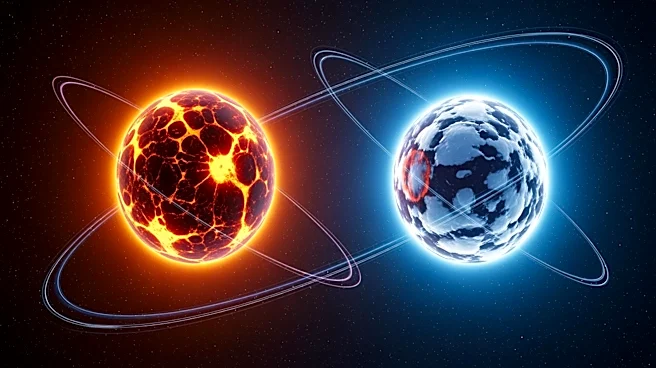
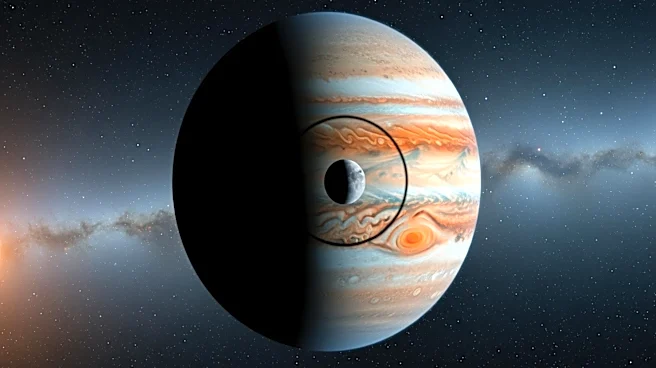
On April 13, skywatchers were treated to a celestial event as two of Jupiter's moons, Io and Europa, crossed paths. This event occurred shortly after midnight CDT, with Europa's shadow transiting Jupiter's disk. As Europa moved westward, Io tracked eastward,
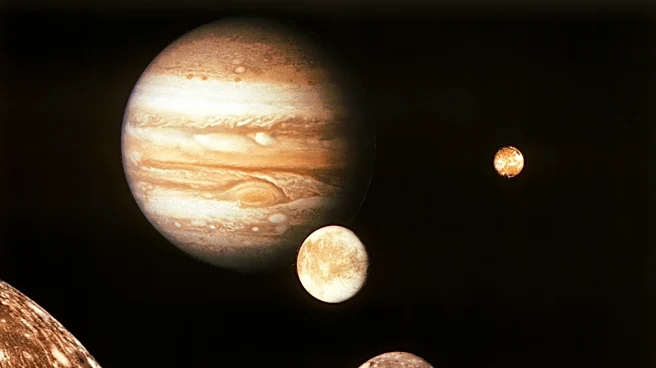
and the two moons crossed paths, with Io standing just north of Europa. This astronomical event was visible to observers in the U.S., particularly those in the Central time zone. The event showcased the dynamic orbital mechanics of Jupiter's Galilean moons, providing a spectacular view for astronomy enthusiasts.
Why It's Important?
Events like the crossing of Io and Europa offer valuable opportunities for both amateur and professional astronomers to observe and study the complex gravitational interactions between celestial bodies. These observations can enhance our understanding of the dynamics of planetary systems, which is crucial for the study of exoplanets and the search for potentially habitable worlds. Additionally, such events engage the public's interest in astronomy, fostering a greater appreciation for science and the natural world.