
What's Happening?
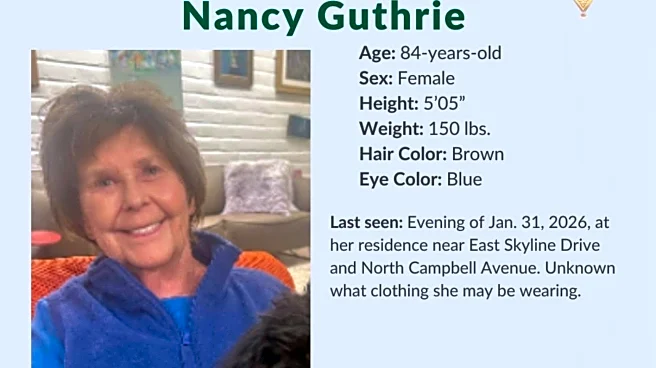
In a significant development in the Nancy Guthrie case, authorities have released doorbell camera footage showing a masked individual at her home, despite initial beliefs that no video was retrievable.
The footage was recovered with the help of Google engineers, raising questions about data retention and privacy. Guthrie, 84, has been missing since January 31, and the video shows a person tampering with her camera. The recovery of this footage, despite Guthrie not having a paid Nest subscription, has sparked concerns about the extent of corporate control over personal data and the implications for privacy.
Why It's Important?
This case highlights the potential privacy risks associated with smart home devices and the data they collect. The ability to recover video footage without a subscription suggests that companies may retain data longer than consumers realize, raising questions about data security and user consent. The incident underscores the need for clearer privacy policies and greater transparency from tech companies regarding data handling practices. It also prompts a broader discussion about the balance between security and privacy in the digital age.
What's Next?
The case may lead to increased scrutiny of tech companies' data retention policies and could prompt calls for regulatory action to protect consumer privacy. Lawmakers and privacy advocates may push for stricter guidelines on how companies handle and store user data. Additionally, consumers may become more cautious about the use of smart home devices, potentially influencing market trends and product development in the tech industry.