



What's Happening?
The International Renewable Energy Agency (IRENA) is supporting Senegal's Ministry of Energy, Petroleum and Mines (MEPM) in a comprehensive Energy Planning Capacity Building Programme. This initiative, launched in 2023 and now concluding its second phase,
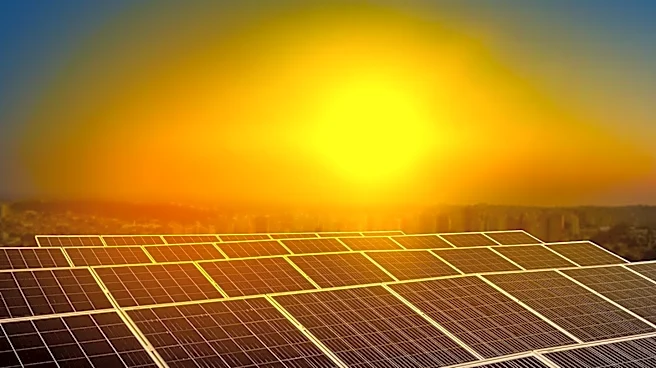
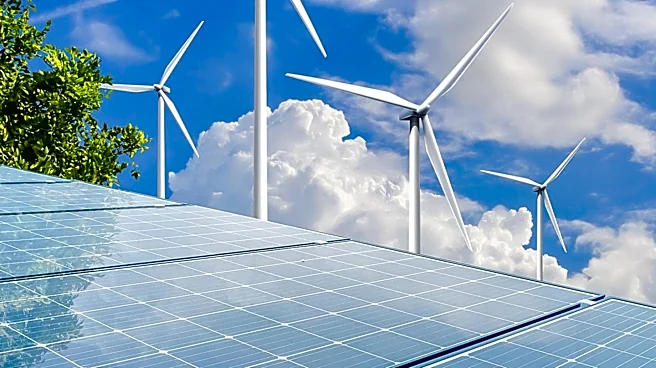
aims to strengthen Senegal's energy planning capabilities to meet rising power demand, attract investment, and close the energy access gap. The program has focused on developing practical planning skills across approximately a dozen national institutions and establishing an official government energy planning and modeling unit. Participants have utilized data-driven tools to create long-term electricity demand projections, capacity expansion models, and rural electrification scenarios. This analysis has informed recommendations for wind and solar capacity additions and supported revisions to Senegal’s national climate commitments. Since the program's first phase, over 800 MW of committed solar PV and battery storage projects have been added to the pre-2030 pipeline. Senegal has also established its first official cross-institutional task force for long-term power sector planning and created a harmonized electricity sector database. The country now possesses three planning tools covering demand projections, electricity capacity expansion, and geo-resolved rural electrification analysis, with geospatial modeling helping to identify viable grid expansion areas and suitable off-grid solutions.
Why It's Important?
This initiative is crucial for Senegal as it seeks to provide electricity to the remaining 15% of its population, primarily in remote communities, while advancing its sustainable energy and economic objectives. The program's success in building local capacity and providing data-driven tools will enable Senegal to make informed decisions regarding its energy infrastructure, attracting necessary investment for expansion. The addition of over 800 MW of solar PV and battery storage projects signifies a substantial step towards diversifying the energy mix and reducing reliance on traditional fossil fuels. This transition is vital for meeting international climate targets and ensuring energy security. The establishment of a cross-institutional task force and a harmonized electricity sector database will foster greater coordination and efficiency in energy planning, leading to more robust and sustainable development. The focus on both grid expansion and off-grid solutions demonstrates a comprehensive approach to achieving universal electricity access, which is a fundamental driver of economic development and improved quality of life.
What's Next?
The program is expected to continue into a new phase, aiming to further institutionalize energy planning practices in Senegal and drive the energy transition. This next phase will likely focus on implementing the recommendations derived from the current planning efforts, translating data-driven insights into tangible energy projects. Continued support from IRENA and other partners will be essential for sustaining the momentum and ensuring the long-term success of Senegal's energy goals. The institutionalization of energy planning will involve integrating these new tools and methodologies into the regular operations of government agencies, ensuring that future energy decisions are consistently informed by robust data and analysis. This will also involve ongoing training and capacity building to adapt to evolving energy technologies and market dynamics. The ultimate goal is to attract more investment and implement projects that will lead to universal access to energy across Senegal, contributing to both national development and global climate objectives.
Beyond the Headlines
The collaboration between IRENA and Senegal highlights a broader trend of international organizations supporting developing nations in their energy transitions. This partnership underscores the importance of data-driven decision-making and capacity building in achieving sustainable development goals. Beyond the immediate benefits of increased electricity access, this initiative can serve as a model for other countries facing similar energy challenges, demonstrating how strategic planning and international cooperation can accelerate the shift towards cleaner, more reliable energy systems. The emphasis on both centralized grid expansion and decentralized off-grid solutions reflects a pragmatic approach to energy access, acknowledging the diverse needs and geographical realities of different communities. This holistic strategy is crucial for ensuring equitable access to energy and fostering inclusive economic growth. Furthermore, the program's contribution to revising national climate commitments demonstrates the interconnectedness of energy planning and climate action, reinforcing the global effort to combat climate change.