

What's Happening?
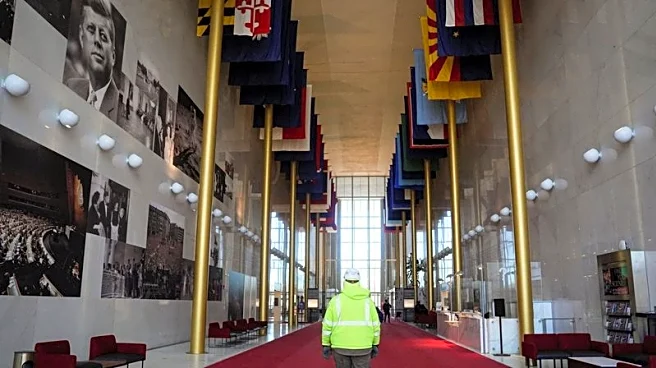
A federal judge has ruled that Democratic lawmaker Joyce Beatty is entitled to participate in a Kennedy Center board meeting to discuss President Trump's proposal to close the center for two years for renovations. The judge, however, did not grant Beatty the right
to vote at the meeting. Beatty, an ex officio member of the board through her congressional position, sued to prevent the Trump administration from excluding her from the meeting. U.S. District Judge Christopher Cooper mandated that Beatty be provided with documents related to the closure and renovation plans, allowing her to speak at the meeting. The Kennedy Center, represented by spokeswoman Roma Daravi, stated it would comply with the court's ruling. Beatty's lawyer argued that the White House has been attempting to suppress dissent in such meetings. The administration's reluctance to share information with Beatty was questioned by the judge, who emphasized the importance of transparency.
Why It's Important?
This ruling underscores the ongoing tensions between the Trump administration and Democratic lawmakers, highlighting issues of transparency and governance in public institutions. The decision allows Beatty to voice her concerns and potentially influence the board's decision-making process regarding the Kennedy Center's future. The case also reflects broader political dynamics, as President Trump has shown increased interest in the Kennedy Center's operations, appointing loyalists to its board and securing significant funding for its renovation. The outcome of this meeting could impact the center's operations, financial health, and public perception, especially given the controversy surrounding the addition of Trump's name to the institution.
What's Next?
The Kennedy Center board meeting is expected to proceed with Beatty's participation, where she will have the opportunity to present her objections and attempt to sway other board members. The board will decide on the approval of the renovation plans and the center's temporary closure. The outcome of this meeting could lead to further legal challenges or political maneuvers, depending on the board's decision and the reactions from stakeholders. The Trump administration's handling of the Kennedy Center's operations will likely continue to be scrutinized, especially in light of the recent changes in leadership and the center's financial challenges.
Beyond the Headlines
The situation at the Kennedy Center raises questions about the role of political influence in cultural institutions and the potential implications for artistic freedom and public trust. The controversy over the addition of Trump's name to the center and the subsequent backlash from the Kennedy family highlights the cultural and historical significance of the institution. The renovations and temporary closure could also affect the local economy and the livelihoods of those who rely on the center for employment and cultural engagement. The broader implications of this case may influence how public institutions navigate political pressures and maintain their integrity.