
What's Happening?
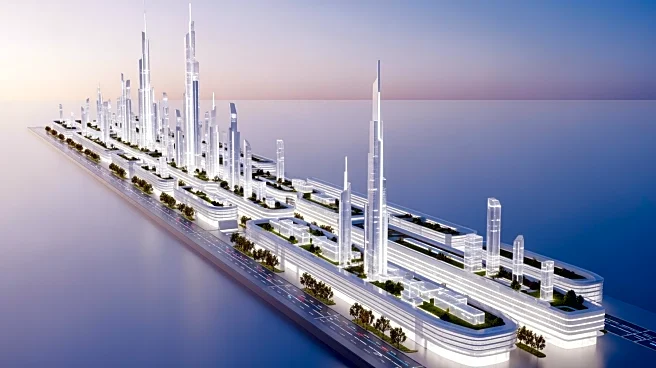
Saudi Arabia is constructing 'The Line,' a futuristic city designed to house up to nine million residents in a linear structure 170 km long. The project aims to redefine urban living by eliminating cars
and reducing commutes, with a focus on sustainability and renewable energy. The Line is part of the larger NEOM project and is expected to cost hundreds of billions of dollars. However, it faces criticism over environmental impacts and human rights concerns related to forced evictions.
Why It's Important?
The Line represents a bold experiment in sustainable urban development, challenging traditional city planning models. If successful, it could serve as a blueprint for future megacities, addressing issues like overcrowding and pollution. However, the project's high cost and potential environmental and social impacts raise questions about its feasibility and ethical implications. The Line's success or failure could influence global urban planning and sustainability efforts.
What's Next?
As construction progresses, The Line will need to address environmental concerns, particularly its impact on bird migration and local ecosystems. Additionally, the project must navigate human rights issues, ensuring that local communities are not adversely affected. The global community will be watching closely to see if The Line can deliver on its promises of sustainability and innovation without compromising ethical standards.
Beyond the Headlines
The Line's development highlights the tension between technological ambition and ethical considerations. While it promises a new way of living, the project must balance innovation with respect for human rights and environmental preservation. The outcome of The Line could set a precedent for how future megaprojects are evaluated and implemented, emphasizing the need for comprehensive impact assessments and stakeholder engagement.