
What's Happening?
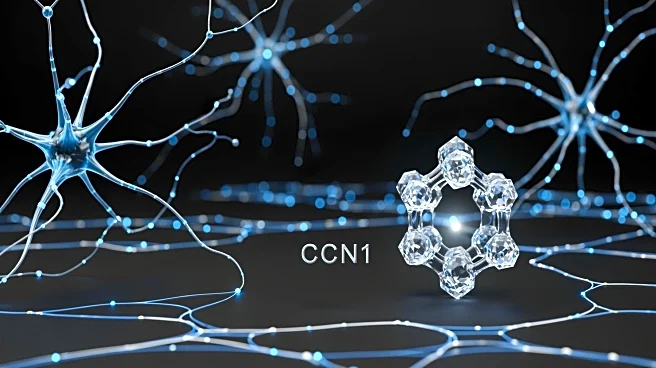
Researchers at the Salk Institute have discovered that the astrocyte-secreted protein CCN1 plays a crucial role in stabilizing neural circuits in the adult brain. This finding, published in the journal
Nature, highlights the active role of astrocytes, previously considered passive support cells, in maintaining the connectivity of neuronal circuits. The study suggests that CCN1 could be a new therapeutic target for neurological diseases such as Alzheimer's, depression, and PTSD. By binding to integrin proteins on cell surfaces, CCN1 coordinates the maturation of various cell types, reducing the plasticity of the adult brain. This discovery could inform the development of treatments for brain injuries and strokes, where CCN1 upregulation has been observed.
Why It's Important?
The identification of CCN1 as a regulator of neuroplasticity in adults is significant because it opens new avenues for treating neurological conditions that involve circuit instability. By potentially controlling plasticity, therapies could be developed to recover or rebuild neural circuits lost due to injury or trauma. This research underscores the importance of astrocytes in brain function and could lead to innovative treatments that enhance brain repair mechanisms. The ability to manipulate CCN1 levels could have profound implications for improving outcomes in patients with brain injuries or degenerative diseases.
What's Next?
Future research will likely focus on developing therapeutic strategies that leverage the role of CCN1 in neuroplasticity. This could involve creating drugs that modulate CCN1 activity to enhance brain repair processes. Additionally, further studies may explore the broader applications of this discovery in other neurological disorders. The potential to reopen the window of plasticity in the adult brain could revolutionize how conditions like Alzheimer's and PTSD are treated, offering hope for more effective interventions.
Beyond the Headlines
The discovery of CCN1's role in brain stability also raises questions about the ethical implications of manipulating brain plasticity. While enhancing plasticity could aid recovery, it might also affect cognitive functions in unforeseen ways. Researchers and ethicists will need to consider the long-term impacts of such interventions on brain health and individual identity. This development also highlights the evolving understanding of astrocytes, shifting the perception of these cells from passive to active participants in brain function.