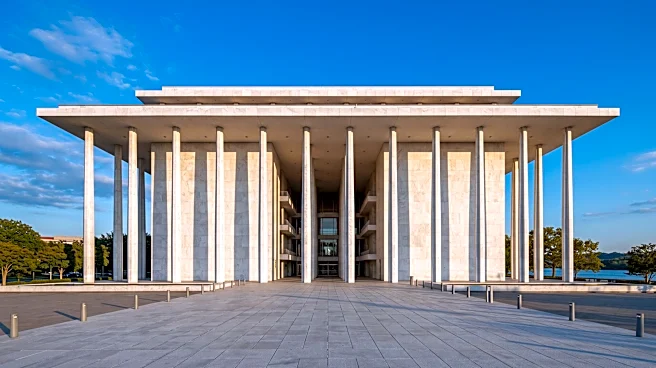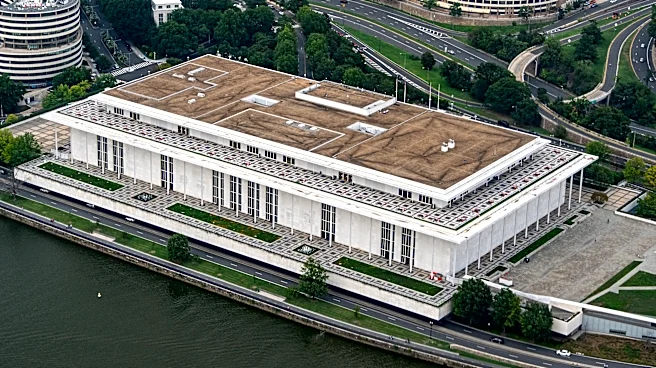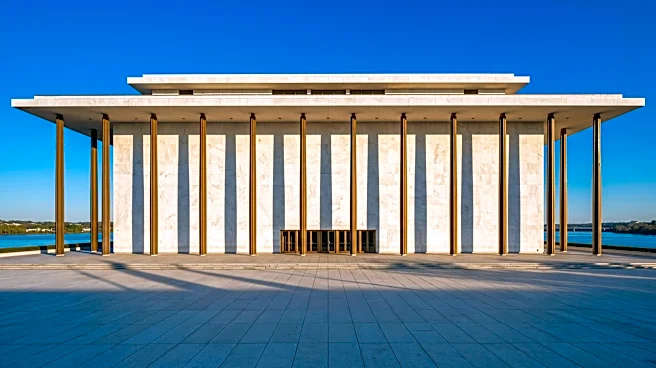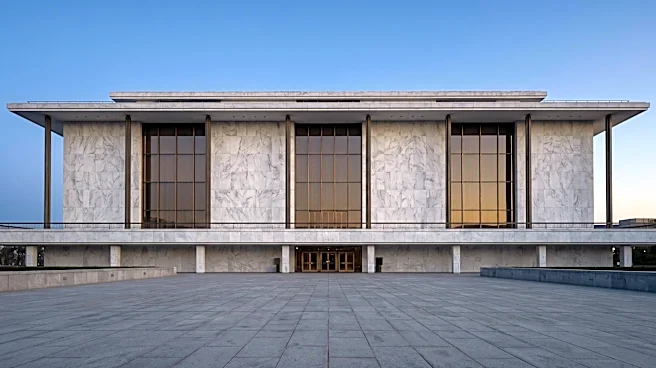

What's Happening?
A federal judge is currently scrutinizing a recent effort by the Kennedy Center board to recognize President Trump with an inscription on the building. U.S. District Court Judge Christopher Cooper expressed
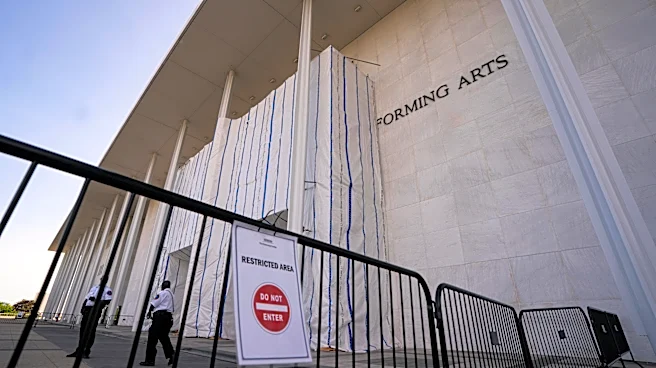
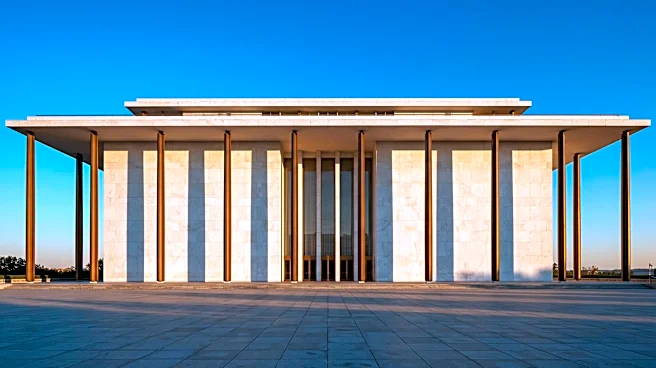
concerns on Thursday, August 27, regarding the board's rapid timeline for this decision, suggesting he might block the proposal due to the rushed process. This move follows a previous ruling that had removed President Trump's name from the center. The Justice Department has informed the court that the Kennedy Center board will not attempt to add President Trump's name before October 8, allowing additional time for a judicial decision. The board asserts that the proposed inscription acknowledges President Trump's contributions to the center's maintenance, differentiating it from earlier attempts to rename the entire facility. Commerce Secretary Howard Lutnick has warned of potential demolition if President Trump's name is not attached, citing the center's poor condition. However, Judge Cooper has questioned the board's authority to rename parts of the center, raising concerns that such a precedent could lead to similar actions for other presidents.
Why It's Important?
This situation highlights ongoing tensions surrounding President Trump's influence on Washington landmarks and the legal complexities involved in decisions concerning the Kennedy Center's naming and renovations. The judge's intervention underscores the importance of due process and proper governance in public institutions, especially when decisions involve prominent political figures. The debate over the inscription reflects broader societal divisions regarding how past presidents are honored and remembered in public spaces. If the board's decision is upheld, it could set a precedent for how future contributions to national cultural institutions are recognized, potentially influencing fundraising and public perception. Conversely, if the judge blocks the proposal, it would reinforce the judiciary's role in overseeing the actions of public boards and ensuring adherence to established legal frameworks. The Commerce Secretary's warning about potential demolition also brings to light the critical financial and structural needs of national cultural institutions and how political considerations can become intertwined with their maintenance and preservation.
What's Next?
The Kennedy Center board has agreed not to proceed with adding President Trump's name before October 8, providing a window for Judge Cooper to make a more thorough decision. This delay suggests that further legal arguments and deliberations will occur before any final action is taken. Democratic Representative Joyce Beatty, who challenged the board's decision, and her lawyer, Nathaniel Zelinsky, will likely continue to press the judge for intervention, fearing the board might attempt to proceed secretly. The board's decision to close the center for renovations is also expected to face additional legal challenges, indicating a prolonged legal battle over both the recognition of President Trump and the broader renovation plans. Stakeholders, including political leaders, legal experts, and civil society groups, will be closely watching the judge's ruling, as it could significantly impact future decisions regarding the naming and renovation of national landmarks and the extent of judicial oversight in such matters.
Beyond the Headlines
This case delves into deeper implications concerning the intersection of politics, public memory, and the governance of national cultural institutions. The controversy over recognizing President Trump at the Kennedy Center reflects a broader cultural struggle over how historical figures are commemorated and the criteria used for such honors. It raises questions about the appropriate balance between acknowledging contributions and avoiding politicization of non-partisan institutions. The judge's inquiry into the board's authority to rename parts of the center touches upon the long-term implications for the integrity and historical continuity of national landmarks. This situation could trigger a re-evaluation of existing policies and guidelines for naming and dedicating public spaces, potentially leading to more stringent rules to prevent future controversies. Furthermore, the legal challenges surrounding the renovation plans highlight the ethical responsibilities of boards in managing public assets and ensuring transparency in their decision-making processes, especially when significant public funds or historical legacies are at stake.