








What's Happening?
A recent review of wildfire research, titled 'Still Standing: A synthesis of local characteristics influencing housing survivability during WUI wildfires,' by Oregon State University researchers Rachel Fields, Erica Fischer, and Christopher Dunn, reinforces
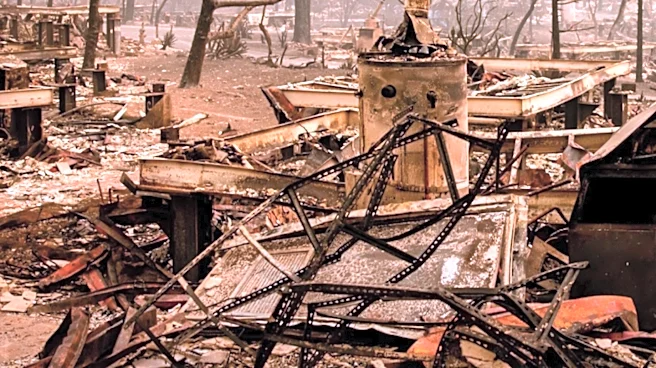
the effectiveness of homeowner actions in increasing home survival during wildland-urban interface (WUI) wildfires. The study synthesized findings from dozens of previous studies, concluding that no single factor guarantees survival, but a combination of characteristics, including the home itself, surrounding vegetation, neighborhood layout, and suppression efforts, collectively improve a home's chances. Key actions identified include creating and maintaining defensible space, reducing combustible vegetation near the home, using fire-resistant building materials, and strengthening the home against embers, radiant heat, and direct flame contact. These findings align with recommendations from organizations like the Texas A&M Forest Service, which promotes homeowner education and community programs for wildfire preparedness.
Why It's Important?
This research is crucial because it empowers homeowners in wildfire-prone areas by demonstrating that proactive measures can significantly mitigate risk. It shifts the narrative from helplessness to agency, providing concrete, evidence-based strategies for protection. The emphasis on a multi-layered approach, rather than a single solution, highlights the complexity of wildfire dynamics and the need for comprehensive preparedness. For communities, the findings underscore the importance of collaborative efforts among residents, local officials, and fire departments to address wildfire risk across neighborhoods. This collective action can lead to more resilient communities and potentially reduce the overall economic and social costs associated with devastating wildfires. The research also informs public policy and educational initiatives, guiding resource allocation and promoting effective risk reduction practices that can save lives and property.
What's Next?
The reinforced research findings are expected to drive continued and expanded efforts in homeowner education and community-level wildfire preparedness programs. Organizations like the Texas A&M Forest Service will likely leverage this synthesis to further refine and promote their existing initiatives, encouraging wider adoption of defensible space creation, fire-resistant landscaping, and home hardening techniques. There may be increased collaboration between research institutions, government agencies, and local communities to implement these strategies more effectively. Policy discussions could also be influenced, potentially leading to incentives for homeowners to adopt these measures or stricter building codes in high-risk WUI areas. The focus will remain on proactive prevention and mitigation, aiming to reduce the severity and impact of future wildfires on residential areas.
Beyond the Headlines
Beyond the immediate practical applications, this research highlights a growing understanding of the intricate relationship between human development and natural ecosystems. It underscores the concept of 'living with fire' rather than simply fighting it, advocating for a more integrated approach to land management and urban planning in fire-prone regions. The study implicitly touches upon the economic burden of wildfires, suggesting that investments in homeowner preparedness can lead to long-term savings in suppression costs and property losses. Furthermore, the emphasis on community collaboration points to the social capital built through collective action, fostering stronger, more resilient neighborhoods in the face of environmental threats. This shift towards shared responsibility and proactive adaptation is a critical component of addressing the broader challenges posed by climate change and increasing wildfire frequency.