
What's Happening?
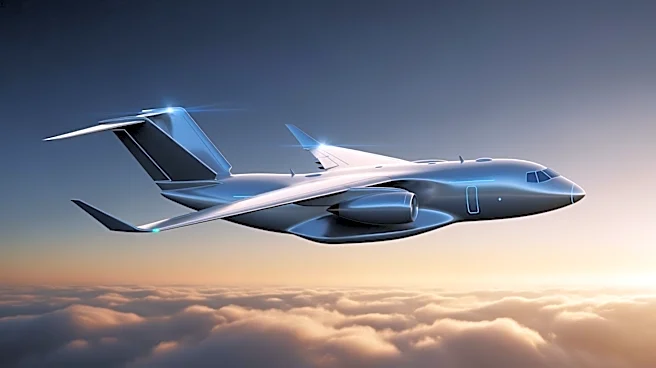
China has unveiled new images of its Shaanxi Y-15 tactical transport aircraft, which is seen as a potential replacement for the Y-9 family. The Y-15, also referred to as the Y-30, resembles the Airbus
A400M and is powered by the Aero Engine Corporation of China's WJ-10 turboprop. The aircraft features a distinctive long probe above the cockpit, likely for air-to-air refueling, and has four-wheel main bogies, unlike the A400M's six-wheel design. The Y-15 first appeared on Chinese social media in December 2025, and recent test flights over Xian have provided more clarity on its design. However, details about its testing schedule and service entry remain limited.
Why It's Important?
The development of the Y-15 signifies China's ongoing efforts to modernize its military capabilities, particularly in tactical transport. This aircraft could enhance the operational flexibility of the People's Liberation Army Air Force by providing a more capable alternative to the Y-9. The Y-15's design improvements, such as the advanced refueling capabilities and updated engine, reflect China's ambition to compete with Western military technology. This development could impact global military dynamics, as it may influence other nations to advance their own military transport technologies in response.
What's Next?
While the Y-15's exact timeline for entering service is unclear, its emergence suggests that China is prioritizing the enhancement of its air transport fleet. The international community will likely monitor the Y-15's progress closely, as its deployment could shift regional power balances. Additionally, the aircraft's capabilities may prompt other countries to reassess their military transport strategies and investments.
Beyond the Headlines
The Y-15's development also highlights the role of social media in disseminating military advancements, as initial images surfaced online. This raises questions about the transparency and control of military information in the digital age. Furthermore, the potential for photo manipulation with artificial intelligence underscores the need for caution in interpreting such images.