
What's Happening?
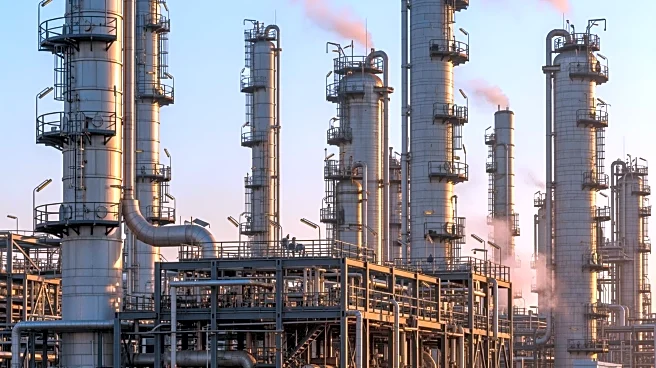
Ghana has restarted operations at its only oil refinery, the Tema Oil Refinery (TOR), after a six-year shutdown. This move is part of a strategic effort to reduce the country's annual oil import bill,
which stands at USD 10.2 billion. The refinery, which has faced challenges such as aging infrastructure, financial constraints, and operational disruptions, was forced to cease operations following a fire in 2017 and mounting debts. The government-backed rehabilitation and maintenance work aims to strengthen energy security and reduce fuel import costs, which have significantly impacted foreign exchange reserves and consumer prices. If fully operational, TOR could supply up to 60% of Ghana's local fuel demand, potentially saving about USD 400 million per month in fuel imports. However, there is no official confirmation on the current throughput levels, indicating that the restart may be partial or in early testing phases.
Why It's Important?
The resumption of operations at Ghana's Tema Oil Refinery is significant for several reasons. It represents a critical step towards energy self-sufficiency for Ghana, reducing reliance on imported refined products and conserving foreign exchange. This move is part of a broader trend across Africa, where countries are investing in local refining capacity to improve energy security, create industrial jobs, and stabilize domestic fuel supplies. For Ghana, successfully maintaining operations at TOR could lead to substantial economic benefits, including reduced import costs and improved energy security. However, sustaining production will require consistent crude supply, adequate working capital, and ongoing technical upgrades. The success of this initiative could serve as a model for other African nations seeking to enhance their energy independence.
What's Next?
The future of the Tema Oil Refinery's operations will depend on several factors, including securing a consistent supply of crude oil and addressing any remaining technical and financial challenges. The government and stakeholders will need to ensure that the necessary infrastructure and financial support are in place to maintain and potentially expand operations. Additionally, the success of this restart could influence other African countries to pursue similar initiatives, furthering the continent's push towards energy self-sufficiency. Monitoring the refinery's performance and addressing any emerging issues will be crucial to sustaining its operations and achieving the intended economic benefits.
Beyond the Headlines
The restart of Ghana's refinery highlights broader implications for the country's economic and energy policies. It underscores the importance of infrastructure investment and financial management in achieving energy independence. The initiative also raises questions about the long-term sustainability of such projects, given past challenges with financing and maintenance. Furthermore, the move reflects a growing recognition among African nations of the need to develop local refining capacity to reduce vulnerability to global market fluctuations and enhance economic resilience. As Ghana navigates these challenges, the outcomes could influence regional energy strategies and policy decisions.