



What's Happening?
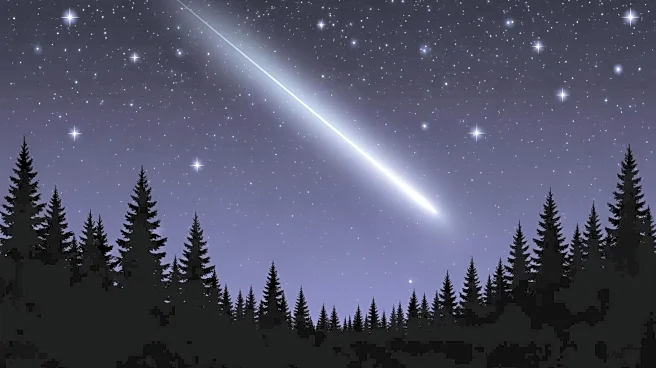
The Ursid meteor shower, the last major meteor shower of the year, is set to peak soon, offering a celestial display in the nighttime and early morning skies. This meteor shower, which is more subdued compared to others, will be visible from the Northern
Hemisphere until December 26. During its peak, skywatchers can expect to see five to ten meteors per hour, with potential outbursts reaching up to 25 meteors per hour. The Ursids originate from the comet 8P/Tuttle and are named after the constellation Ursa Minor, from which the meteors appear to radiate. The narrow crescent moon during this period will not significantly hinder visibility, making it an ideal time for observation. No special equipment is needed to view the meteor shower, but it is recommended to find a dark location away from city lights for the best experience.
Why It's Important?
Meteor showers like the Ursids provide a unique opportunity for people to connect with the natural world and appreciate the wonders of the universe. They also serve as a reminder of Earth's place in the cosmos and the ongoing interactions with celestial bodies. For astronomers and enthusiasts, meteor showers offer a chance to study the composition and behavior of meteoroids as they enter Earth's atmosphere. Additionally, such events can inspire interest in astronomy and science, encouraging educational pursuits and public engagement with space-related topics.