





What's Happening?
The Civil Rights Act of 1957 marked a significant legislative effort to protect Black civil rights in the United States, being the first such bill to become law in eighty-two years. The act was introduced in response to pivotal events such as the Brown
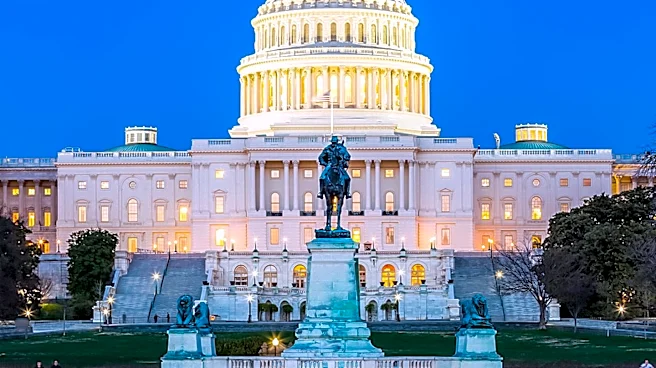
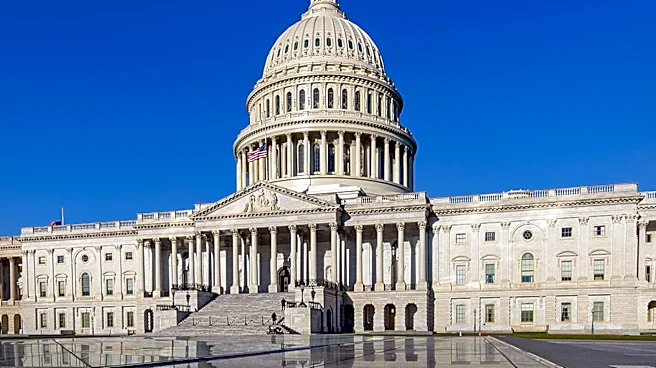
v. Board of Education decision, the murder of Emmett Till, and the Montgomery Bus Boycott. President Eisenhower's administration, with Justice Minister Herbert Brownell, proposed the legislation, which faced strong opposition from Southern Democrats. Senate Majority Leader Lyndon Johnson played a crucial role in navigating the bill through Congress. He orchestrated strategic maneuvers to weaken the enforcement mechanisms of the bill while ensuring its passage. This included removing Part III, which would have granted the Justice Department stronger enforcement powers, and adding a jury trial amendment that limited the bill's effectiveness in protecting Black voting rights. Johnson's efforts involved complex political alliances, including a surprising pact with Western Democrats over the Hells-Canyon Dam project.
Why It's Important?
The passage of the Civil Rights Act of 1957 was a landmark moment in U.S. history, breaking decades of legislative inertia on civil rights issues. Although the act was largely symbolic and its enforcement mechanisms were diluted, it set a precedent for future civil rights legislation in the 1960s. The act highlighted the political complexities and the necessity of strategic compromises in advancing civil rights. It underscored the influence of political self-interest over a genuine commitment to racial justice, as the act's passage was driven more by political maneuvering than by a dedication to civil rights. The act's legacy lies in its role as a stepping stone, paving the way for more substantial reforms in the following decade.
What's Next?
The Civil Rights Act of 1957 laid the groundwork for subsequent civil rights legislation, including the Civil Rights Act of 1964 and the Voting Rights Act of 1965. These later acts addressed many of the shortcomings of the 1957 act, providing stronger enforcement mechanisms and broader protections for civil rights. The political strategies and alliances formed during the passage of the 1957 act continued to influence legislative processes in the years that followed. The act's passage also contributed to a shift in political dynamics, with increased support from Black voters for parties that championed civil rights legislation.
Beyond the Headlines
The Civil Rights Act of 1957 serves as a case study in the interplay between political strategy and civil rights advocacy. It reveals the challenges of enacting meaningful reform in the face of entrenched opposition and highlights the role of political leaders in shaping the trajectory of civil rights legislation. The act's passage demonstrated the potential for legislative action to catalyze broader social change, even when the immediate impact is limited. It also underscores the importance of continued advocacy and vigilance in the pursuit of racial justice, as the struggle for civil rights is ongoing and requires sustained effort and commitment.