
What's Happening?
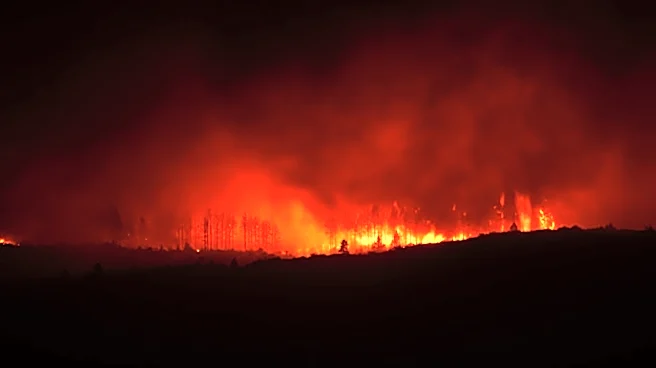
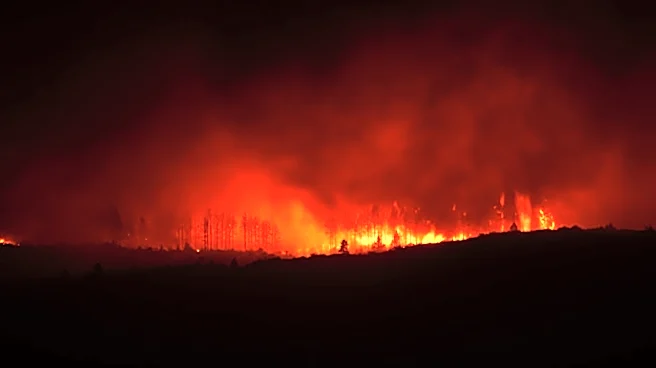
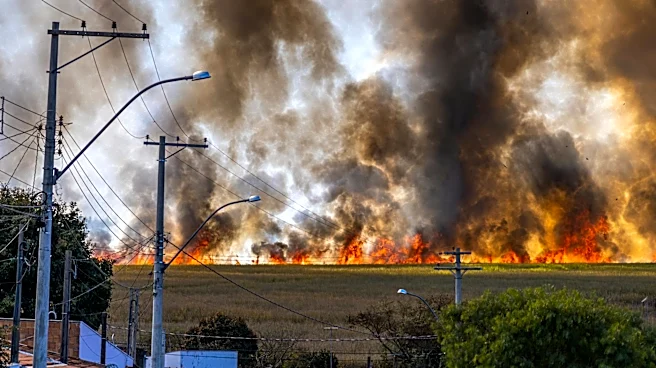
Recent research led by Amirhossein Montazeri from Boise State University reveals a paradox in wildfire trends: while the number of wildfires has decreased, the intensity and acreage burned have increased.
The study, covering over 750,000 wildfires in the Western U.S. from 1992 to 2020, found a 31% reduction in wildfire occurrences but a 40% increase in land burned. This trend is attributed to climate change, which creates warmer and drier conditions conducive to rapid fire growth. The research highlights the growing size and intensity of wildfires, with large fires increasing by 63% and very large fires by 136%.
Why It's Important?
The findings underscore the complex challenges posed by climate change on wildfire management. While prevention efforts have reduced the number of human-caused fires, the increased intensity of remaining fires poses significant risks to ecosystems, property, and human safety. This trend necessitates a reevaluation of current fire management strategies, emphasizing the need for adaptive approaches that consider climate impacts. The research provides critical insights for policymakers and land managers to develop more effective fire prevention and response strategies, potentially influencing future environmental policies and resource allocation.
What's Next?
The study suggests that understanding weather and fuel moisture thresholds could improve fire management decisions, such as when to allow natural fires to burn or when to implement aggressive suppression tactics. As climate change continues to influence fire behavior, ongoing research and monitoring will be essential to adapt strategies and mitigate risks. Collaboration among scientists, policymakers, and communities will be crucial to address the increasing threat of intense wildfires and protect vulnerable regions.