





What's Happening?
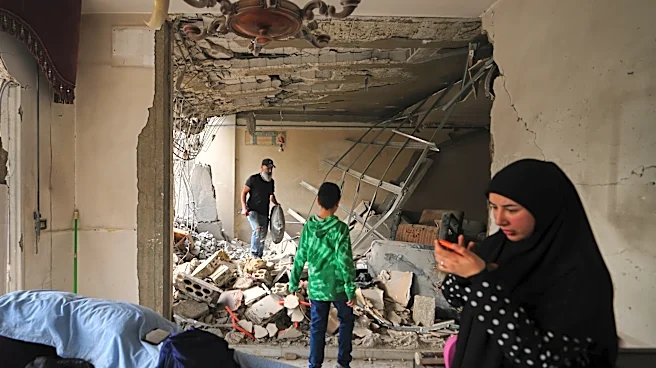
Doctors Without Borders (MSF) has accused Israel of using water as a weapon of collective punishment against Palestinians in Gaza. According to MSF, Israeli authorities have destroyed or damaged nearly 90% of Gaza's water and sanitation infrastructure,
including desalination plants and pipelines. This claim is based on data from the United Nations, the European Union, and the World Bank. MSF's emergency manager, Claire San Filippo, highlighted the dire consequences of this situation, noting that Palestinians have been injured and killed while trying to access water, and the deprivation has severe impacts on health and hygiene. In response, the Coordination of Government Activities in the Territories (COGAT) rejected these claims as factually incorrect, stating that Israel consistently supplies water to Gaza, exceeding humanitarian thresholds. COGAT accused MSF of echoing propaganda and failing to follow standard protocols.
Why It's Important?
The allegations by MSF and the subsequent denial by COGAT highlight the ongoing humanitarian crisis in Gaza and the contentious nature of resource distribution in conflict zones. Access to water is a critical issue, impacting public health, sanitation, and overall living conditions. The accusations against Israel, if true, suggest a severe violation of human rights and international law, potentially exacerbating tensions in the region. Conversely, COGAT's denial and claims of consistent water supply suggest a different narrative, emphasizing the complexity of information and propaganda in conflict areas. The situation underscores the challenges faced by humanitarian organizations operating in politically sensitive environments and the potential for their reports to influence international perceptions and policy decisions.
What's Next?
The ongoing dispute between MSF and COGAT may lead to increased scrutiny from international bodies and human rights organizations. There could be calls for independent investigations to verify the claims and assess the actual conditions in Gaza. The situation may also prompt diplomatic discussions or interventions aimed at ensuring the protection of civilian infrastructure and the provision of essential services. Additionally, the controversy might influence the operations of other NGOs in the region, affecting their strategies and engagement with local authorities.
Beyond the Headlines
The allegations of using water as a weapon raise ethical and legal questions about the conduct of warfare and the responsibilities of occupying powers. The situation in Gaza reflects broader issues of resource control and the impact of conflict on civilian populations. Long-term, the destruction of infrastructure could lead to lasting environmental and public health challenges, complicating future recovery efforts. The narrative battle between MSF and COGAT also highlights the role of information warfare in modern conflicts, where controlling the narrative can be as crucial as controlling territory.