

What's Happening?
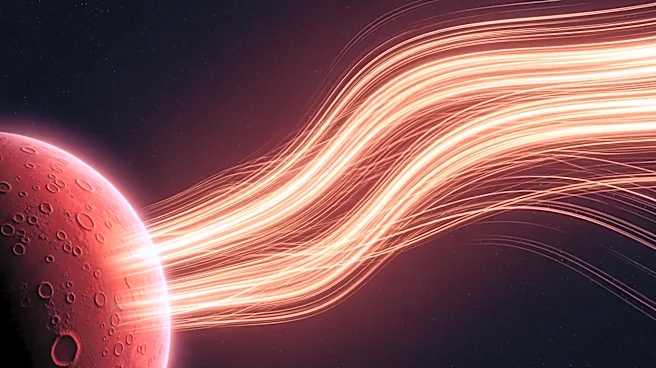
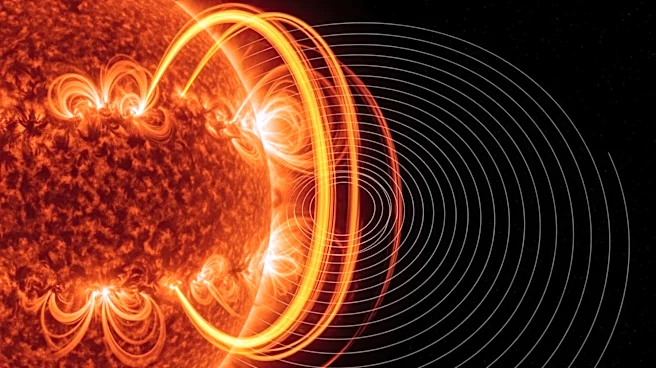
NASA scientists have discovered a new solar wind phenomenon in Mars' atmosphere using data from the now-silent MAVEN spacecraft. The phenomenon, known as the Zwan-Wolf effect, was previously only observed around strongly magnetized planets like Earth.
This discovery was made during the analysis of data collected after a solar storm hit Mars in December 2023. The findings suggest that charged particles are funneled along temporary magnetic structures, a process not expected to occur in Mars' weak magnetic environment.
Why It's Important?
This discovery could reshape our understanding of how space weather affects planets without strong magnetic fields, like Mars. It may provide insights into atmospheric dynamics and the potential for habitability on other planets. The findings could also influence future Mars missions and the development of technologies to protect spacecraft from solar radiation. Understanding these interactions is crucial for planning long-term human exploration of Mars.
What's Next?
NASA is working to reestablish contact with the MAVEN spacecraft, which lost communication in December 2025. An anomaly review board is assessing the spacecraft's condition and recovery prospects. Meanwhile, researchers will continue to analyze the data to explore the implications of the Zwan-Wolf effect on Mars and potentially other celestial bodies.