


What's Happening?
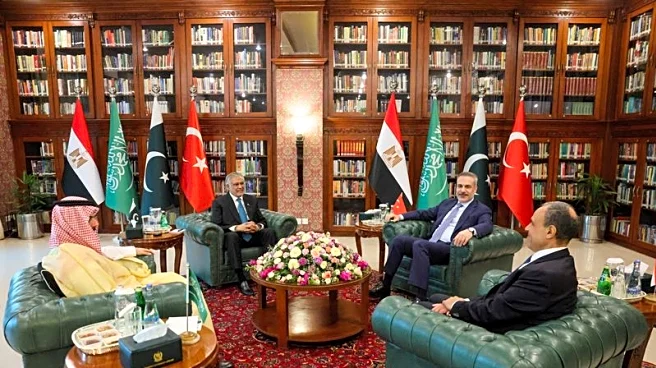
Regional powers are set to meet in Pakistan to discuss strategies for ending the ongoing conflict in the Middle East. This meeting comes as approximately 2,500 U.S. Marines have been deployed to the region, and Iranian-backed Houthi rebels have joined
the monthlong war. The conflict has had significant global repercussions, including threats to oil and natural gas supplies, fertilizer shortages, and disruptions in air travel. The meeting in Islamabad will include top diplomats from Saudi Arabia, Turkey, and Egypt, aiming to facilitate dialogue between the United States and Iran.
Why It's Important?
The meeting of regional powers in Pakistan is a critical step towards addressing the escalating conflict in the Middle East, which poses significant threats to global stability. The involvement of major regional players highlights the complexity of the situation and the need for a coordinated diplomatic effort to de-escalate tensions. The conflict's impact on global oil and gas markets underscores the economic stakes involved, affecting countries worldwide. Successful negotiations could lead to a reduction in hostilities and a stabilization of the region, benefiting global trade and security.
What's Next?
The outcome of the meeting in Pakistan could set the stage for future diplomatic efforts to resolve the Middle East conflict. Key stakeholders, including the United States and Iran, may engage in direct dialogue to address their differences and seek a peaceful resolution. The involvement of regional powers like Saudi Arabia, Turkey, and Egypt could facilitate a broader consensus on de-escalation strategies. The international community will be closely monitoring the situation, as any progress could have far-reaching implications for regional and global stability.