




What's Happening?
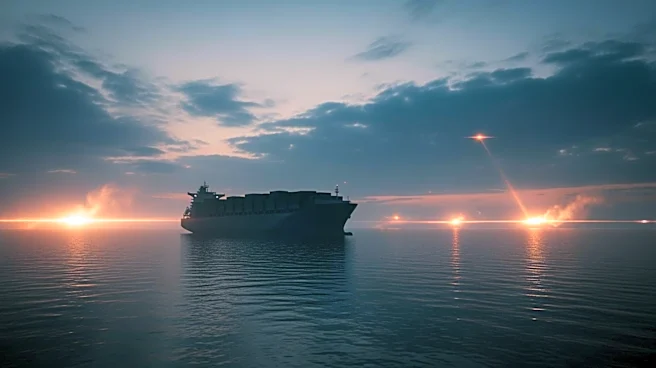
Iran's Islamic Revolutionary Guard Corps (IRGC) has claimed responsibility for a drone strike on an MSC container ship, identified as MSC Ishyka, in the Gulf region. The IRGC stated that the vessel, allegedly linked to the Zionist regime, was struck in the Strait
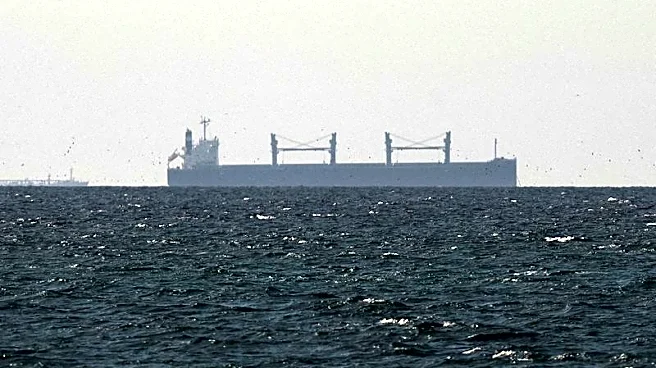
of Hormuz and caught fire. However, the ship, listed as MSC Ishyka III, was reported to be at berth in Manama, Bahrain, and not in the Strait of Hormuz at the time of the alleged attack. The ship's AIS signal, which had disappeared for a month following U.S. attacks on Iran, reappeared on April 2 in Manama before disappearing again. No independent authorities have confirmed the IRGC's claims, and the UK Maritime Trade Operations (UKMTO) has not included the incident in its official reports. The MSC Ishyka III, a 34,000 dwt container feeder, has been operated by MSC since 2014 and is owned by Pasithea Oceanway Ltd.
Why It's Important?
The claim by Iran's IRGC highlights ongoing tensions in the Gulf region, particularly in the Strait of Hormuz, a critical chokepoint for global oil shipments. Such incidents can escalate geopolitical tensions and impact international shipping routes, potentially affecting global trade and oil prices. The lack of independent verification of the IRGC's claim raises questions about the accuracy of the report and the potential for misinformation in conflict zones. The incident underscores the risks faced by commercial vessels operating in the region, which could lead to increased insurance costs and security measures for shipping companies. Additionally, the claim of a link to Israeli interests, despite no direct evidence, reflects the complex political dynamics in the Middle East.
What's Next?
If the IRGC's claims are proven false, it could undermine their credibility in the international community. However, if further evidence emerges supporting the claim, it could lead to increased military and diplomatic tensions between Iran and other nations, particularly those with vested interests in the Gulf region. Shipping companies may need to reassess their security protocols and routes to mitigate risks. The international community, including maritime organizations, may call for increased monitoring and protection of commercial vessels in the area to prevent future incidents.
Beyond the Headlines
The incident highlights the broader issue of maritime security in conflict-prone regions. It raises ethical questions about the use of drones in military operations and the potential for collateral damage to civilian infrastructure. The situation also reflects the ongoing struggle for influence in the Middle East, where regional powers use various means, including misinformation, to assert dominance. Long-term, this could lead to shifts in global shipping patterns and increased reliance on alternative routes to avoid conflict zones.