








What's Happening?
A Pensacola charter fishing group recently recovered a Low-cost Uncrewed Combat Attack System (LUCAS) drone from the Gulf of Mexico, approximately 20 miles southeast of the Pensacola pass. The drone, which had impacted the water during routine scheduled
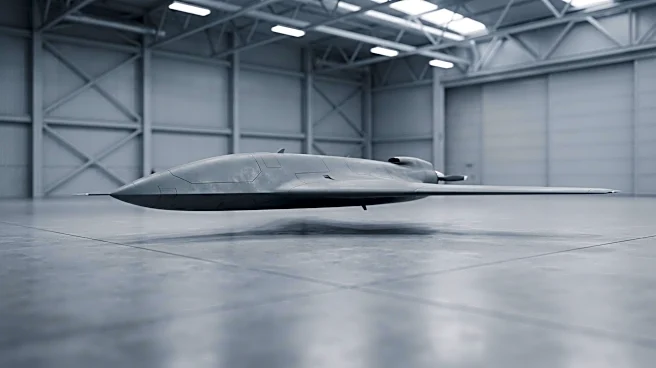
testing on the Eglin Air Force Base Range, was subsequently retrieved by the Air Force. Representative Jimmy Patronis (R-Fla.) issued a statement highlighting the critical role of the Gulf of America and the Florida Panhandle in national security. He stressed the importance of continued investment in the military and the protection of the Gulf testing range to support readiness. The LUCAS drones, about 10 feet long and eight feet wide, can travel up to 85 miles per hour and 15,000 feet high, and are modeled after the Iranian Shahed 136, often used in targeted strikes. These one-way attack drones, also known as kamikaze or suicide drones, debuted in February and were utilized in Operation Epic Fury to defend against Iranian missile and drone attacks.
Why It's Important?
The incident underscores the ongoing military operations and testing activities in the Gulf of Mexico, which are vital for U.S. national security and defense capabilities. Representative Patronis's statement reinforces the strategic significance of the region, particularly for military readiness and technological advancements in drone warfare. The use of LUCAS drones, designed for one-way attacks and modeled after foreign adversaries' technology, indicates a focus on developing cost-effective and potent defensive and offensive capabilities. This development is crucial for maintaining a technological edge and responding to evolving threats. The recovery of the drone by civilians also highlights the potential for public interaction with military assets, necessitating clear protocols for such occurrences to ensure safety and security. Continued investment in military infrastructure and testing ranges in Florida is essential for the development and deployment of these critical defense technologies.
What's Next?
Following the drone recovery, it is likely that Eglin Air Force Base will continue its routine scheduled testing of LUCAS drones and other military equipment in the Gulf of Mexico. Representative Patronis's call for continued military investment and protection of the Gulf testing range suggests potential legislative efforts to secure funding and resources for these activities. The incident may also prompt a review of public awareness campaigns or protocols for civilians who encounter military equipment in testing areas, to ensure safe handling and reporting. The ongoing development and deployment of LUCAS drones will likely continue to be a key component of U.S. defense strategy, particularly in countering threats from adversaries employing similar technologies. Further discussions in Washington regarding military spending and national security priorities in the Gulf region are anticipated.
Beyond the Headlines
The recovery of the LUCAS drone by a civilian fishing charter brings to light the intersection of military operations and civilian activities in shared maritime spaces. While the incident was resolved without harm, it raises questions about the potential for accidental encounters and the need for robust communication and safety measures. The development of one-way attack drones, like LUCAS, reflects a broader shift in modern warfare towards asymmetric and cost-effective solutions. This technological evolution has significant ethical and strategic implications, as these drones can be deployed with precision but also raise concerns about escalation and the nature of conflict. The modeling of LUCAS after the Iranian Shahed 136 also highlights the continuous cycle of technological adaptation and counter-adaptation in global military strategies, emphasizing the importance of intelligence and rapid innovation in maintaining national security.