

What's Happening?
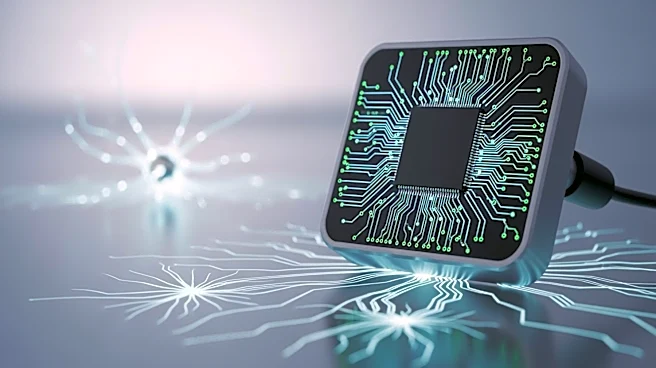
A team at North Carolina State University has developed CAMEO, a novel sensor technology that records electrical activity in human cerebral organoids affordably and at scale. This innovation addresses challenges in studying neurodevelopmental disorders
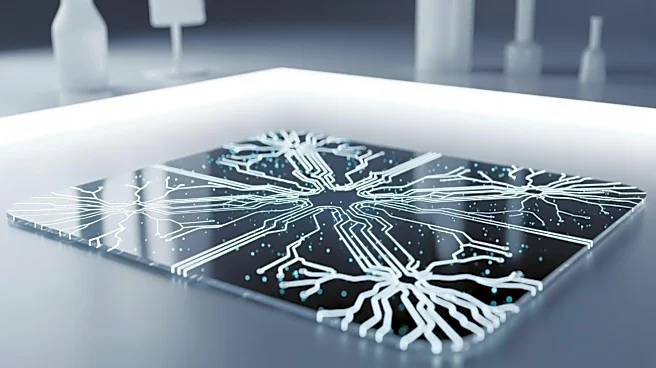
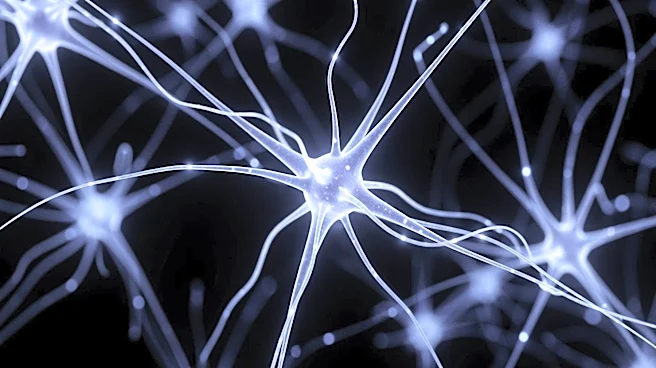
by providing a cost-effective method to monitor brain tissue activity. Cerebral organoids, or 'mini-brains,' are crucial for understanding brain function and disease mechanisms. Traditional methods are expensive and limit research scope. CAMEO uses carbon nanotube technology to create a flexible, sensitive array that captures subtle neural signals. This advancement could revolutionize research into conditions like Angelman syndrome by enabling large-scale studies.
Why It's Important?
CAMEO's development represents a significant leap in neurological research, offering a scalable and affordable tool for studying brain activity. This could accelerate discoveries in neurodevelopmental disorders, leading to better diagnostics and treatments. By reducing costs, more laboratories can conduct extensive research, enhancing data reliability and collaboration. The technology's potential extends beyond organoids, possibly benefiting other tissue models and bioengineered constructs. This could lead to advancements in brain-computer interfaces and neuroprosthetics, impacting fields like neurogenetics and synthetic biology.
What's Next?
The CAMEO technology is poised for further development and potential commercialization, which could broaden its application in various research settings. Researchers may explore its use in other three-dimensional tissue models, expanding its impact on biomonitoring and synthetic biology. The technology's integration with brain-computer interfaces and neuroprosthetics could be explored, offering new possibilities for treating neurological disorders. As the technology becomes more accessible, it could lead to standardized data collection and sharing across the neuroscience community, fostering collaboration and accelerating knowledge building.