






What's Happening?
A recent study published in Science Advances reveals that marine heat waves are significantly intensifying the damage caused by hurricanes and tropical cyclones. Researchers analyzed 1,600 tropical cyclones that made landfall since 1981 and found that those
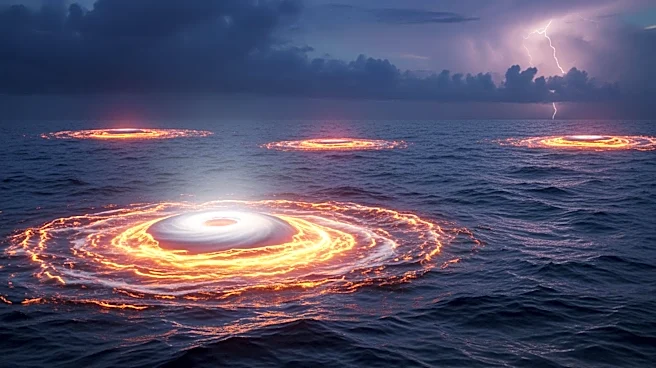
passing over areas of extra-hot water were more likely to intensify rapidly. This phenomenon has led to a 60% increase in disasters causing at least $1 billion in damage when these storms hit land. The study highlights the role of marine heat waves, defined as long-lasting, large areas of water in the top 10% of historical heat, in amplifying hurricanes. These heat waves are becoming more frequent due to climate change and warmer oceans, posing a greater threat to coastal areas.
Why It's Important?
The findings underscore the growing threat posed by climate change-induced marine heat waves, which are fueling more intense hurricanes. This has significant implications for coastal communities, emergency preparedness, and long-term planning. As hurricanes become more destructive, the economic impact on affected regions is expected to rise, with more frequent billion-dollar disasters. The study suggests that forecasters and emergency officials need to account for the presence of marine heat waves when predicting hurricane intensity and potential damage. This could lead to changes in evacuation planning and infrastructure design to better protect against the increasing severity of storms.
What's Next?
The study calls for updated evacuation plans and infrastructure designs to accommodate the new reality of more intense hurricanes. Coastal engineering and risk management strategies must evolve to address the heightened risks associated with marine heat waves. Governments may need to implement earlier warnings and adjust triggers for evacuations to ensure public safety. Additionally, flood protection measures, drainage systems, and sea walls may require redesigning to withstand the increased threat posed by rapidly intensifying storms.
Beyond the Headlines
The study highlights the broader implications of climate change on hurricane dynamics, emphasizing the need for comprehensive strategies to mitigate its impact. As marine heat waves become more prevalent, they could alter the frequency and intensity of hurricanes, leading to long-term shifts in coastal environments. This necessitates a reevaluation of current policies and practices to ensure resilience against future climate-related challenges.