




What's Happening?
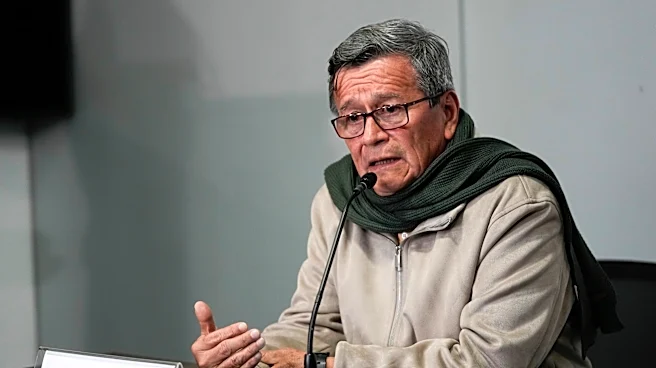
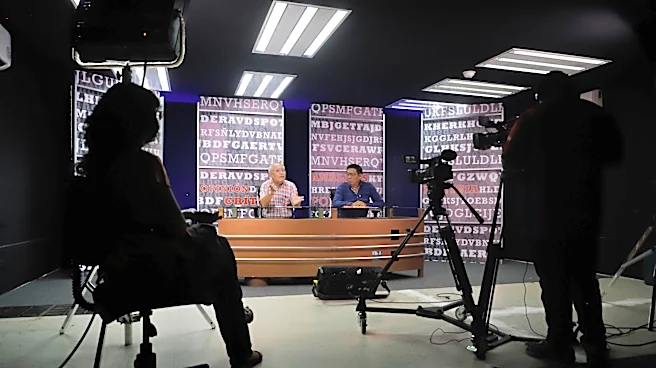
Francesca Albanese, the United Nations Special Rapporteur on the Palestinian territories, has issued an apology for inaccurately claiming that Jews in Nazi concentration camps were referred to as 'Muslims.' During an interview with the Latin American
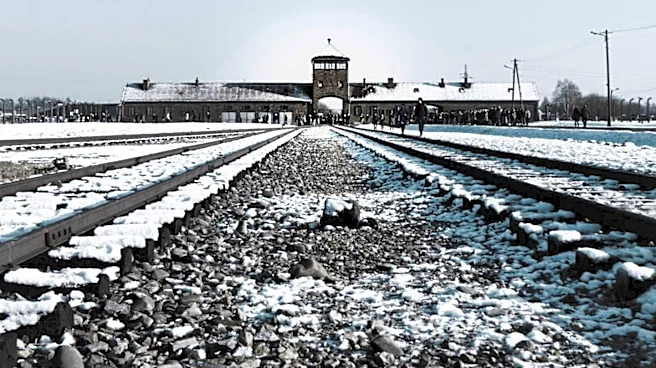
and Caribbean Confederation of State Workers, Albanese had suggested that the term 'antisemitism' originally encompassed hostility towards all Semitic peoples, not exclusively Jews. She cited accounts from concentration camps where, she claimed, Jews being led to gas chambers were called 'the Muslims.' Albanese later clarified on X (formerly Twitter) that she had misinterpreted the German term 'Muselmann,' which literally means 'Muslim.' This term was used in Nazi camps to describe prisoners on the verge of death due to extreme exhaustion and starvation, regardless of their religious or ethnic background. She also acknowledged that the word 'antisemitism' was specifically coined to denote hatred of Jews, correcting her earlier assertion that it had a broader initial meaning.
Why It's Important?
This incident is significant as it highlights the critical importance of historical accuracy, particularly concerning sensitive topics like the Holocaust and antisemitism. Misinterpretations or distortions of such historical terms can inadvertently fuel misinformation and undermine efforts to combat prejudice. The role of a UN Special Rapporteur carries considerable weight, and their statements can influence public perception and international discourse. Albanese's initial comments drew strong criticism, with some accusing her of Holocaust distortion. Her subsequent apology underscores the need for rigorous factual verification, especially when discussing historical atrocities and the origins of discriminatory terms. The controversy also brings attention to ongoing debates surrounding the definition and scope of antisemitism, a term that the International Holocaust Remembrance Alliance and many historians assert has always referred specifically to prejudice and hatred directed at Jews.
What's Next?
Following her apology, Francesca Albanese will likely face continued scrutiny regarding her public statements and historical interpretations. While she has clarified her position on the terms 'Muselmann' and 'antisemitism,' her broader record as UN Special Rapporteur on the Palestinian territories, which has previously drawn criticism from various governments and organizations, may remain a point of contention. The incident could prompt further discussions within the UN and among international bodies about the responsibilities of special rapporteurs to ensure factual accuracy in their public remarks, especially on historically sensitive subjects. Stakeholders, including Jewish advocacy groups and Holocaust remembrance institutions like Yad Vashem, will likely continue to monitor her statements and actions to ensure adherence to historical facts and a clear understanding of antisemitism.
Beyond the Headlines
The controversy surrounding Francesca Albanese's remarks extends beyond a simple misinterpretation of terms; it touches upon the broader challenge of historical literacy and the potential for mischaracterizations to emerge in public discourse, even from official sources. The term 'Muselmann' itself, while literally meaning 'Muslim,' developed a specific and tragic connotation within the concentration camp context, referring to the most vulnerable prisoners. Understanding such nuances is crucial to preserving the memory of the Holocaust and preventing its distortion. Furthermore, the debate over the origin and meaning of 'antisemitism' reflects ongoing efforts to define and combat this form of hatred effectively. Any attempt to broaden or dilute its specific meaning can inadvertently diminish the historical and contemporary experiences of Jewish people targeted by antisemitism, potentially hindering efforts to address it.