


What's Happening?
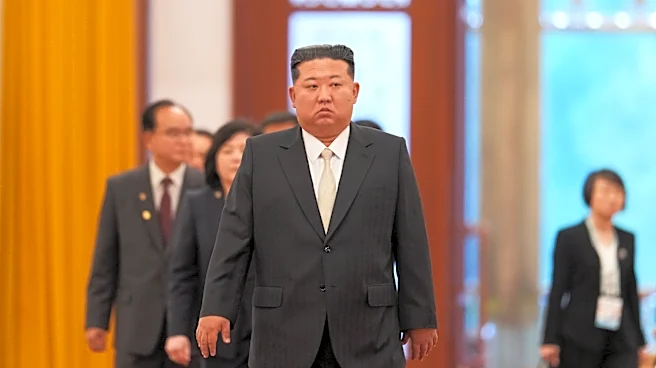
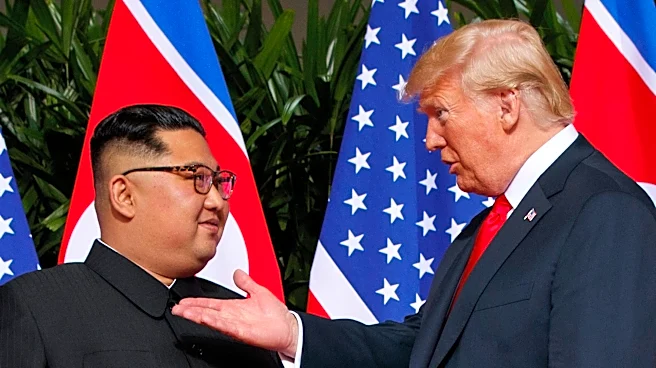
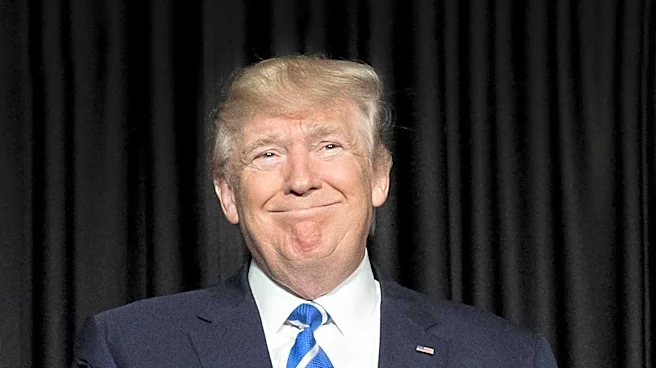
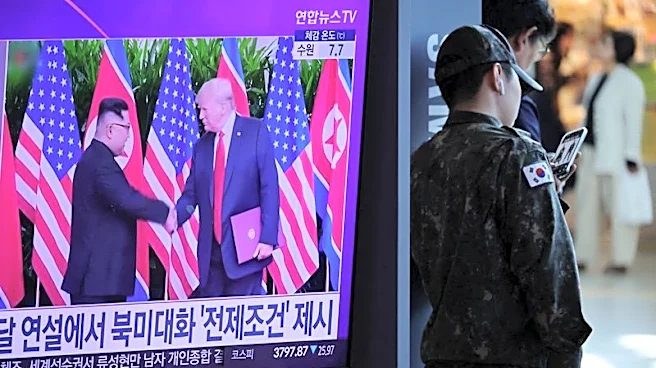
During a White House press briefing, President Trump became agitated with CNN's senior White House correspondent, Kristen Holmes, after she questioned him about potential communications with North Korean dictator Kim Jong-un regarding U.S. military exercises
with South Korea. President Trump instructed Holmes to 'Be quiet!' and accused her of 'faking news' and being a 'fake reporter.' This exchange followed a social media post by President Trump indicating his dissatisfaction with U.S.-South Korea joint military exercises, citing his relationship with Kim Jong-un, and stating his intention to instruct Defense Secretary Pete Hegseth to reduce them. Separately, the White House communications team criticized Holmes for asking President Trump to respond to a remark made by Georgia Sen. Jon Ossoff concerning one of President Trump's aides, Natalie Harp. Ossoff's comment at a campaign rally alluded to President Trump's focus on personal endeavors and Harp's travel arrangements. President Trump dismissed Ossoff's remark, referring to him as 'Pee-wee Herman.' The press event was originally intended to honor a teenage lifeguard, Ryder Williams.
Why It's Important?
This incident highlights ongoing tensions between the White House and certain media outlets, particularly concerning the nature of journalistic inquiry and the administration's responses. President Trump's public admonishment of a reporter for asking about sensitive foreign policy matters, such as discussions with North Korea, raises questions about press freedom and the accessibility of information regarding international relations. The White House's subsequent social media attacks on Holmes, accusing her of asking a 'disgusting and inhumane question,' further escalate the rhetoric against the press. CNN's defense of Holmes underscores the media's role in holding public officials accountable and the importance of asking 'tough, relevant, and newsworthy questions.' This dynamic can impact public trust in both the media and government, potentially influencing how information is disseminated and perceived by the American populace. The incident also draws attention to the administration's approach to criticism and its willingness to engage in direct confrontations with journalists.
What's Next?
The confrontation between President Trump and CNN's Kristen Holmes is likely to fuel continued debate regarding media relations and the role of the press in covering the White House. CNN has already issued a statement defending Holmes, indicating their firm stance against personal attacks on journalists. It is probable that other media organizations and press freedom advocates will weigh in on the incident, potentially leading to broader discussions about journalistic ethics and the treatment of reporters by government officials. The White House's communications strategy, particularly its use of social media to directly criticize journalists, may continue to be a point of contention. Future press briefings and public appearances by President Trump could see similar exchanges, as reporters continue to pursue questions on sensitive topics, and the administration maintains its assertive posture. The ongoing implications for U.S. foreign policy, particularly regarding North Korea and military exercises with South Korea, will also remain a subject of media scrutiny, regardless of the administration's interactions with the press.
Beyond the Headlines
The exchange between President Trump and Kristen Holmes transcends a simple disagreement, touching upon fundamental aspects of democratic governance and the relationship between power and information. The President's characterization of a reporter as 'fake' and his attempts to silence questions can be seen as part of a broader strategy to delegitimize critical reporting, potentially eroding public confidence in independent journalism. This approach can have long-term implications for the health of democratic discourse, where a well-informed citizenry relies on a free and unhindered press. Furthermore, the White House's use of official communication channels to launch personal attacks on journalists raises ethical concerns about the appropriate use of government resources and the potential for chilling effects on reporting. The incident also highlights the increasing polarization of media consumption, where audiences may be more inclined to trust sources that align with their existing political views, further complicating the landscape for objective reporting and public understanding of complex issues.