






What's Happening?
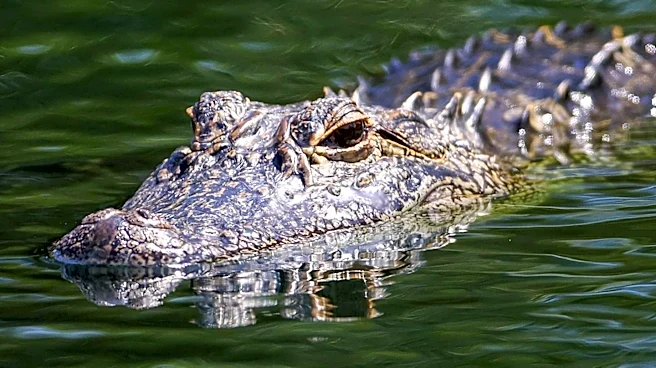
A deadly hit-and-run crash occurred on I-95 in Florida after an alligator in the roadway caused a chain of events leading to a fatality. According to a Florida Highway Patrol crash report, a 2010 Mercedes-Benz, traveling south on I-95 around 11:52 p.m.
Sunday, struck an alligator that its driver was unable to avoid. Subsequently, a 2004 Toyota Tacoma swerved to avoid the Mercedes-Benz, lost control, and overturned. The driver of the Toyota, a 20-year-old woman, was ejected from her vehicle. A third vehicle, also traveling south on I-95, then struck the ejected driver, who was in the roadway, and fled the scene. The Toyota driver was pronounced dead at the scene. The crash report indicated she was not wearing a seat belt. The 58-year-old Mercedes-Benz driver remained at the scene, and the incident is currently under investigation.
Why It's Important?
This incident highlights significant road safety concerns, particularly the unpredictable hazards that wildlife can pose on major highways. The involvement of an alligator, a common but dangerous animal in Florida, underscores the unique challenges drivers face in certain regions. The subsequent hit-and-run aspect of the crash further emphasizes issues related to driver accountability and public safety on U.S. roads. The fact that the deceased driver was not wearing a seat belt also brings to light the critical importance of seat belt usage in mitigating severe injuries or fatalities during accidents. This event could prompt discussions on enhanced wildlife management near highways, improved road lighting, or public awareness campaigns about defensive driving and seat belt compliance, especially in areas known for wildlife crossings.
What's Next?
The crash remains under investigation by the Florida Highway Patrol. Authorities will likely be working to identify and apprehend the driver of the third vehicle that fled the scene, which could lead to criminal charges. The investigation will also aim to reconstruct the full sequence of events to understand all contributing factors. This incident may also lead to a review of road safety measures on I-95, particularly in areas prone to wildlife encounters. Public safety campaigns might be initiated to remind drivers about the dangers of wildlife on roads and the necessity of wearing seat belts. Depending on the findings, there could be calls for increased vigilance from drivers and potentially new strategies for managing wildlife near busy roadways.
Beyond the Headlines
Beyond the immediate tragedy, this incident touches upon broader themes of human-wildlife coexistence and the legal and ethical responsibilities of drivers. The presence of large wildlife on highways is a recurring issue in many parts of the U.S., often leading to severe accidents. This event could reignite debates about infrastructure design, such as wildlife crossings or fencing, to prevent animals from entering high-speed roadways. Furthermore, the hit-and-run element raises questions about societal values regarding responsibility and compassion in emergency situations. The legal ramifications for fleeing the scene of a fatal accident are severe, and the pursuit of justice for the victim will be a key focus. This crash serves as a stark reminder of the unpredictable nature of driving and the profound impact of individual choices, such as wearing a seat belt or remaining at the scene of an accident.