
What's Happening?
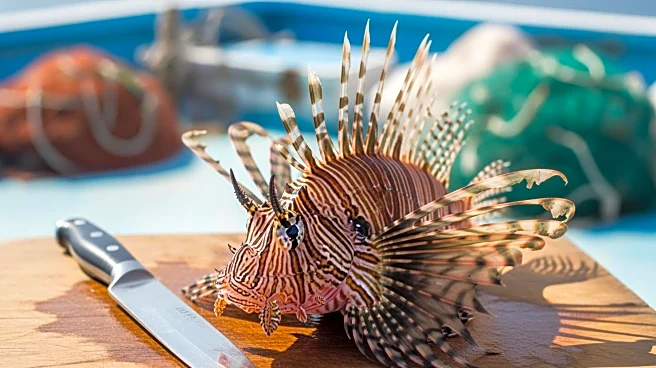
Fishermen in Cyprus are increasingly targeting the invasive lionfish, which has spread from the Red Sea to the Mediterranean, threatening local fish stocks and the livelihoods of approximately 150 professional
fishermen. The lionfish, known for its venomous spikes and distinctive red and orange stripes, poses a significant threat to indigenous marine life. The warming waters of the Mediterranean, exacerbated by climate change, have facilitated the spread of this species. In response, local fishermen, supported by EU initiatives, are attempting to mitigate the impact by promoting lionfish as a culinary delicacy. This effort includes a social media campaign, #TasteTheOcean, which encourages the consumption of invasive species as a sustainable alternative to traditional fish.
Why It's Important?
The invasion of lionfish in the Mediterranean highlights the broader issue of climate change and its impact on marine ecosystems. The presence of invasive species like the lionfish disrupts local biodiversity and threatens the economic stability of fishing communities. By promoting lionfish as a food source, Cyprus aims to reduce the environmental threat while providing a new economic opportunity for fishermen. This approach not only addresses the ecological imbalance but also offers a potential model for other regions facing similar challenges. The success of this initiative could influence EU policies on managing invasive species and support sustainable fishing practices.
What's Next?
The ongoing efforts to control the lionfish population include EU-funded compensation programs and projects like RELIONMED, which involve culling lionfish in marine protected areas. The success of these initiatives depends on public acceptance of lionfish as a viable food option. If the campaign gains traction, it could lead to a more sustainable fishing industry in Cyprus and potentially inspire similar strategies in other affected regions. Continued monitoring and adaptation of strategies will be crucial as climate change continues to alter marine environments.