






What's Happening?
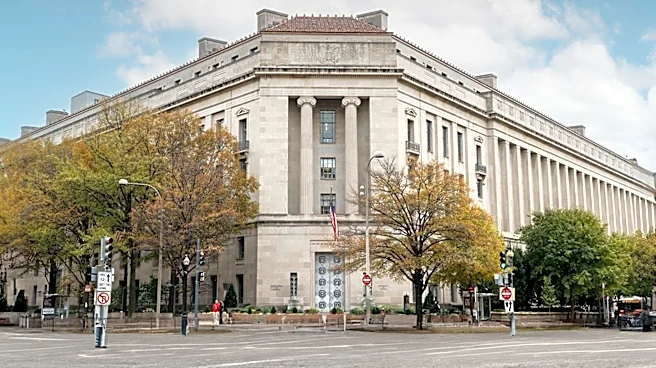
The U.S. Department of Justice (DOJ) has filed a lawsuit against the State of New York, seeking to prevent the enforcement of the recently enacted Local Cops, Local Crimes Act (N.Y. Exec. Law § 170-k). This state law prohibits law enforcement officers
from wearing masks and, more significantly, bars New York law enforcement agencies from entering into or maintaining 287(g) agreements with U.S. Immigration and Customs Enforcement (ICE). The DOJ's complaint alleges that this New York state law violates the Supremacy Clause of the U.S. Constitution. The lawsuit also seeks a preliminary injunction to halt the law's enforcement. In July 2026, New York State Attorney General Letitia James and Governor Kathy Hochul sent letters to 12 New York law enforcement agencies with existing 287(g) agreements, notifying them that the new act requires these agreements to be terminated by August 25, 2026. A federal judge later granted the DOJ's request for a preliminary injunction against the mask ban provision but denied enjoining the ban on 287(g) agreements.
Why It's Important?
This legal challenge highlights a significant conflict between federal and state authority regarding immigration enforcement. The 287(g) program allows state and local law enforcement agencies to enter into agreements with ICE, deputizing local officers to perform certain immigration enforcement functions. New York's Local Cops, Local Crimes Act aims to limit local involvement in federal immigration matters, reflecting a broader national debate over the role of local police in immigration enforcement. The DOJ's lawsuit, asserting a violation of the Supremacy Clause, argues that federal immigration law should preempt state laws that interfere with federal operations. The outcome of this case could set a precedent for other states considering similar legislation, potentially impacting the operational capabilities of ICE and the scope of local law enforcement's responsibilities concerning immigration. It also underscores the ongoing tension between states seeking to establish their own policies on immigration and the federal government's assertion of its constitutional authority.
What's Next?
The legal proceedings will continue, with the U.S. Department of Justice pursuing its lawsuit to block the enforcement of the Local Cops, Local Crimes Act. A federal judge has already issued a preliminary injunction against the mask ban provision, but the core dispute over 287(g) agreements remains. Further court hearings and potential appeals are expected as both sides present their arguments regarding the Supremacy Clause and the extent of state authority in immigration matters. Additionally, a group of 16 New York county sheriffs has filed a separate lawsuit challenging the state laws that prohibit local law enforcement from cooperating with federal immigration authorities, including through 287(g) agreements. This parallel legal action indicates a concerted effort by local officials to preserve their ability to collaborate with federal agencies. The ultimate resolution of these cases will likely determine the future of local immigration enforcement cooperation in New York and could influence similar legislative efforts nationwide.
Beyond the Headlines
The legal battle over New York's Local Cops, Local Crimes Act extends beyond immediate enforcement concerns, touching upon fundamental questions of federalism and the balance of power between state and federal governments. The Supremacy Clause, central to the DOJ's argument, dictates that federal laws generally take precedence over state laws when there is a conflict. However, states often assert their Tenth Amendment rights to govern matters not explicitly delegated to the federal government. This case could redefine the boundaries of state sovereignty in areas traditionally considered federal jurisdiction, such as immigration. Furthermore, the debate reflects differing philosophies on public safety and community trust. Proponents of the New York law argue that local police involvement in immigration enforcement erodes trust within immigrant communities, making residents less likely to report crimes. Conversely, opponents contend that restricting cooperation with federal agencies hinders comprehensive law enforcement efforts and compromises national security. The outcome will have long-term implications for how states and the federal government navigate complex policy areas where their interests may diverge.