
What's Happening?
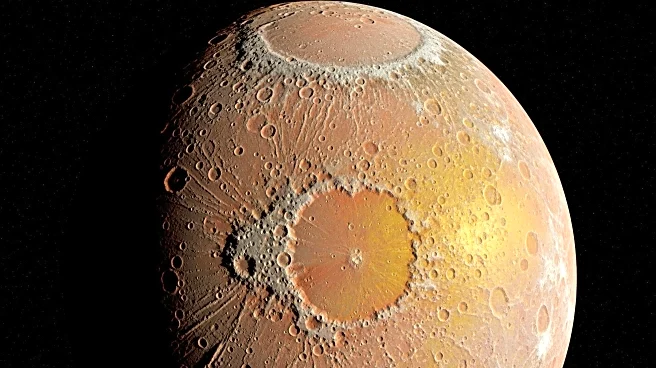
Recent research led by astronomer Valentin Bickel from the University of Bern has revealed that Mercury's surface may still be geologically active. The study, published in Nature Communications Earth &
Environment, analyzed 100,000 high-resolution images of Mercury, identifying 402 bright streaks, or lineae, on the planet's surface. These findings suggest that Mercury, previously thought to be geologically inactive, may still experience surface changes due to the flow of heat and volatile materials from its interior.
Why It's Important?
The discovery of active geological processes on Mercury challenges previous assumptions about the planet's geological history and current state. This new understanding could reshape scientific perspectives on planetary evolution and the conditions necessary for geological activity. The findings also highlight the potential for future missions to Mercury to provide further insights into its geological processes and contribute to broader planetary science knowledge.
What's Next?
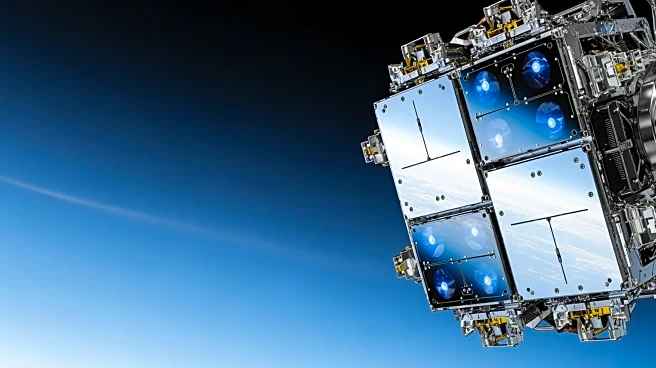
The research team plans to validate their findings with new images from upcoming missions by the European Space Agency and the Japan Aerospace Exploration Agency. These missions could offer more detailed observations of Mercury's surface, helping to confirm the presence of ongoing geological activity and refine models of the planet's evolution.