







What's Happening?
The remains of U.S. Army Air Forces 1st Lt. Franklin H. McKinney, a pilot from Rhode Island, have been identified 82 years after he disappeared during a World War II spy mission. McKinney was part of the 35th Photo Reconnaissance Squadron, known as the 'Redhawks,'
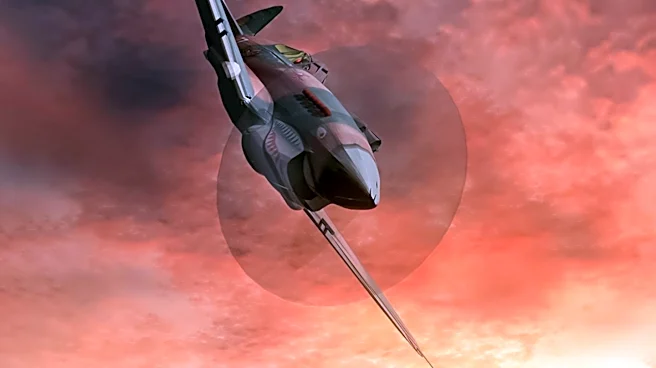
and took off from a U.S. base in Yunnanyi, China, on November 5, 1944, for a reconnaissance mission over Burma and Thailand. His aircraft, an F5E-2-LO Lightning, lost contact and never returned. Decades later, a report from the Royal Thai Air Force Museum suggested that a plane was struck by lightning and crashed in Thailand's Lampang Province on the day McKinney disappeared. In 2018, researchers found a crash site in a rice paddy in the region, which was later confirmed to be McKinney's aircraft. The Defense POW/MIA Accounting Agency (DPAA) conducted investigations and excavations, eventually identifying McKinney's remains using modern forensic techniques.
Why It's Important?
The identification of McKinney's remains highlights the ongoing efforts of the DPAA to account for missing American service members from past conflicts. This development brings closure to McKinney's family, who will now receive a briefing and have his name marked with a rosette on the Walls of the Missing. The case underscores the importance of historical research and modern forensic science in resolving long-standing military mysteries. It also reflects the U.S. military's commitment to honoring its service members by ensuring they are not forgotten, even decades after their disappearance.
What's Next?
With McKinney's remains identified, the DPAA will arrange for him to be laid to rest with full military honors. This process will involve a formal ceremony, providing a dignified conclusion to his story and honoring his service. The DPAA continues its mission to locate and identify other missing service members, utilizing advancements in technology and international cooperation to resolve similar cases. The agency's work remains crucial in providing closure to families and maintaining the legacy of those who served.