







What's Happening?
The Climate Pledge, an initiative co-founded by Amazon and Global Optimism, has introduced SUPEREV in India. This new unified application is designed to simplify the adoption and management of commercial electric vehicle (EV) fleets. Traditionally, fleet operators
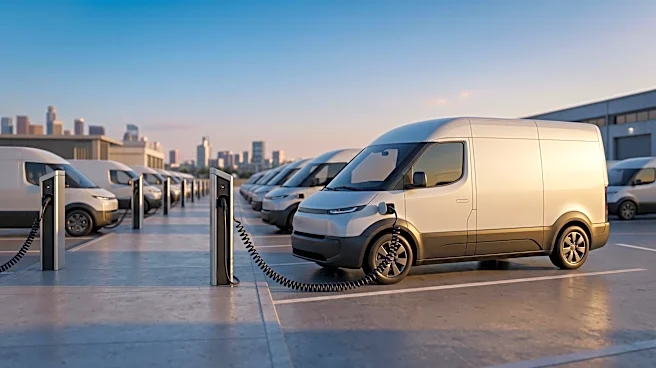
in India have faced challenges juggling multiple apps, providers, and systems to maintain their EV operations. SUPEREV aims to consolidate these functions into a single platform, offering a comprehensive solution for EV fleet management. The app allows users to discover and access over 20,000 charging stations across more than 85 networks, covering over 75% of India's charging infrastructure. Additionally, it facilitates the procurement or leasing of electric vehicles, provides access to financing options, connects operations with verified renewable energy sources, and enables users to request new charging station locations where infrastructure gaps exist. Developed in collaboration with Pulse Energy, SUPEREV supports JOULE (Joint Operation Unifying Last-mile Electrification), a Climate Pledge joint action initiative that brings together various stakeholders including fleet operators, vehicle manufacturers, charging providers, financiers, and energy producers.
Why It's Important?
The launch of SUPEREV in India is a significant step towards accelerating the transition to electric mobility in the commercial sector, which has broader implications for global climate goals. By streamlining the complex process of EV fleet adoption, the app addresses key barriers that have hindered widespread electrification, such as fragmented charging infrastructure and financing challenges. This initiative can serve as a model for other developing economies facing similar hurdles in their decarbonization efforts. For the U.S., while the app is specific to India, it highlights the innovative approaches being developed globally to tackle climate change and reduce carbon emissions. The success of such integrated platforms could influence future strategies for EV infrastructure development and commercial fleet electrification in the U.S., particularly in addressing last-mile delivery and logistics. Furthermore, it underscores the role of large corporations like Amazon in driving sustainable solutions through collaborative initiatives, potentially setting precedents for corporate responsibility and climate action worldwide.
What's Next?
Following its launch, SUPEREV is expected to expand its user base and further integrate more services and partners within the Indian EV ecosystem. The success of this unified platform could lead to its replication or adaptation in other regions, potentially influencing the development of similar solutions in the U.S. and other markets. The Climate Pledge and its partners will likely monitor the app's impact on commercial EV adoption rates and carbon emission reductions in India. Future developments may include enhanced features, broader coverage of charging networks, and deeper integration with renewable energy sources. The initiative also sets a precedent for how technology can be leveraged to foster collaboration among diverse stakeholders in the climate action space, potentially inspiring new partnerships and technological innovations aimed at achieving net-zero carbon goals globally.
Beyond the Headlines
The introduction of SUPEREV goes beyond merely simplifying EV fleet management; it represents a strategic effort to create a cohesive and supportive ecosystem for electric mobility. This integrated approach addresses not only technological and logistical challenges but also financial and energy supply aspects, which are critical for sustainable transitions. The emphasis on connecting operations with verified renewable energy sources highlights a commitment to truly green mobility, rather than just shifting from fossil fuels to grid electricity that might still be carbon-intensive. This holistic strategy could influence policy discussions and investment decisions in the U.S. and other countries, encouraging a more comprehensive approach to EV infrastructure and energy sourcing. Moreover, the collaborative nature of the JOULE initiative, bringing together various industry players, demonstrates the power of collective action in tackling complex environmental issues, fostering a sense of shared responsibility for climate goals.