






What's Happening?
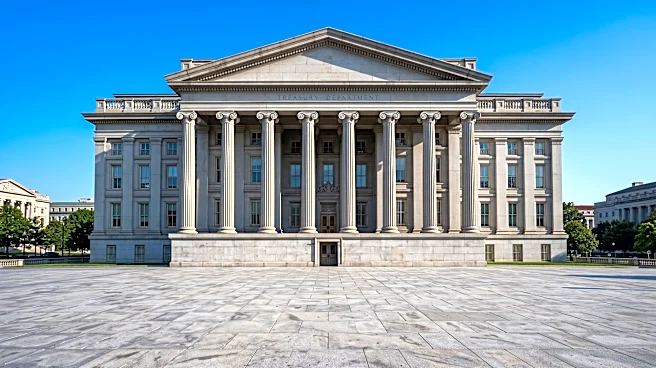
The U.S. Department of the Treasury's Office of Foreign Assets Control (OFAC) has announced several significant actions. OFAC is issuing Counter Terrorism General License 36, which authorizes the wind-down of transactions involving Autistici Inventati.
Concurrently, OFAC has updated its Specially Designated Nationals (SDN) and Blocked Persons List. This update includes the addition of several individuals and entities. Specifically, Zaid Abdulnasser and Rawa Alsagheer have been added to the SDN List, linked to Masar Badil. Furthermore, entities added to the SDN List include Autistici Inventati, Masar Badil (also known as Palestinian Alternative Revolutionary Path Movement), and Palestine Action (also known as Palestine Action Group). These entities are designated for their involvement in data processing, hosting, advocacy, and as a transnational terrorist group, respectively. Additionally, OFAC is issuing Russia-related General License 104B, which authorizes transactions related to imports of certain diamonds prohibited by Executive Order 14068.
Why It's Important?
These actions by the Treasury Department are crucial for the U.S. government's efforts to combat terrorism financing and enforce sanctions regimes. By issuing General License 36, OFAC provides a structured period for entities to cease transactions with Autistici Inventati, minimizing potential disruptions while ensuring compliance with sanctions. The updates to the SDN List directly target individuals and organizations deemed to be involved in terrorist activities or supporting such networks, thereby disrupting their financial operations and limiting their ability to operate globally. The designation of groups like Masar Badil and Palestine Action underscores the U.S. commitment to countering various forms of extremism. The Russia-related General License 104B indicates ongoing adjustments to sanctions policies to manage specific economic impacts while maintaining pressure on targeted sectors. These measures collectively aim to protect the U.S. financial system from illicit activities and advance national security interests.
What's Next?
Entities and individuals previously engaged in transactions with Autistici Inventati will need to comply with the wind-down authorization provided by Counter Terrorism General License 36. Financial institutions and businesses are required to screen their transactions and customer bases against the updated SDN List to ensure they are not engaging with newly designated individuals or entities. Non-compliance with these sanctions can result in severe penalties. OFAC will continue to monitor global financial activities and may issue further designations or general licenses as geopolitical situations evolve and new threats emerge. The ongoing enforcement of these sanctions will likely lead to increased scrutiny of financial flows associated with the designated groups and individuals, potentially impacting their operational capabilities and access to international financial systems.
Beyond the Headlines
The Treasury Department's actions reflect a broader strategy of using financial tools to address national security concerns. By targeting specific individuals and entities, the U.S. aims to isolate them from the global financial system, thereby limiting their resources and operational reach. The inclusion of entities like Autistici Inventati, described as involved in data processing and hosting, highlights the evolving nature of how illicit networks operate, often leveraging digital infrastructure. The designation of advocacy organizations and transnational terrorist groups underscores the multifaceted approach to counter-terrorism, which extends beyond traditional military actions to include financial warfare. These measures also send a strong message to international partners about the U.S. commitment to enforcing sanctions and combating terrorism, encouraging global cooperation in these efforts. The continuous adaptation of sanctions, as seen with the Russia-related diamond imports, demonstrates the dynamic nature of economic statecraft in response to geopolitical shifts.