







What's Happening?
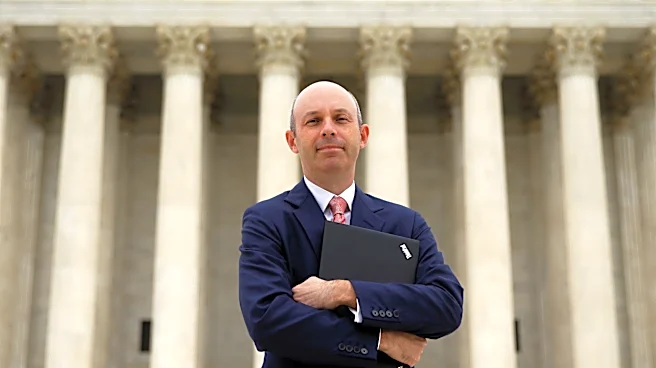
Tom Goldstein, a prominent U.S. Supreme Court lawyer and co-founder of SCOTUSblog, has been sentenced to six years in prison following convictions on federal tax and mortgage fraud charges. The sentencing was delivered by U.S. District Judge Lydia Kay
Griggsby, who also ordered Goldstein to pay $3.1 million in restitution and to be on supervised release for five years post-incarceration. Goldstein's legal troubles stem from his failure to report income, including millions from high-stakes poker games, and mischaracterizing personal expenses as business expenses to evade taxes. Despite being offered a plea deal for a shorter sentence, Goldstein rejected it, unwilling to serve prison time. His case highlights a significant fall from grace for the lawyer, who has argued 44 cases before the Supreme Court.
Why It's Important?
This case underscores the legal and ethical responsibilities of high-profile legal professionals. Goldstein's actions, driven by a gambling addiction, resulted in significant financial misconduct, highlighting the potential for personal issues to impact professional integrity. The sentence serves as a warning to others in the legal field about the consequences of financial impropriety. It also reflects the justice system's stance on holding individuals accountable, regardless of their status, for tax evasion and fraud. The case may influence public trust in legal professionals and the broader legal system, emphasizing the importance of transparency and accountability.
What's Next?
Goldstein has expressed his intention to appeal the sentence, which could lead to further legal proceedings. The outcome of any appeal could impact his future in the legal profession and his ability to repay debts. Additionally, the case may prompt discussions within the legal community about support systems for professionals dealing with personal issues like addiction. The legal ramifications and public scrutiny may also influence how similar cases are handled in the future, potentially leading to stricter oversight and regulations.
Beyond the Headlines
The case raises questions about the intersection of personal struggles and professional responsibilities. Goldstein's gambling addiction played a significant role in his legal troubles, highlighting the need for mental health support within high-pressure professions. The situation also reflects broader societal issues related to gambling and financial management. As Goldstein works on a new project to revolutionize Supreme Court coverage, his case may serve as a catalyst for discussions on ethics and rehabilitation in the legal field.